

Okay, real talk. If you have ever stared into your fridge on a cold evening and thought “I need something that actually fixes this mood,” loaded baked potato soup is the answer. It has everything you already love about a classic baked potato, crispy bacon, sharp cheddar, sour cream, green onions, and it delivers all of it in one thick, creamy, soul-warming bowl. This guide covers every ingredient, every step, and every trick you need to nail it on the first try.
- Ingredients
- Butter
- All-Purpose Flour
- Whole Milk
- Russet Potatoes
- Bacon
- Sharp Cheddar Cheese
- Sour Cream
- Green Onions
- Salt and Pepper
- How to Make Loaded Baked Potato Soup (Step by Step)
- Step 1: Build Your Roux
- Step 2: Whisk in the Milk
- Step 3: Add the Potatoes and Simmer
- Step 4: Mash the Potatoes Partially
- Step 5: Add the Bacon and Green Onions
- Step 6: Remove from Heat and Stir in Sour Cream
- Step 7: Season and Serve
- Pro Tips to Make the Perfect Loaded Baked Potato Soup
- Serving Ideas
- Frequently Asked Questions
- Can I make this soup ahead of time?
- Can I use a different type of potato?
- Why did my soup turn out lumpy?
- How do I store and reheat leftovers?
- Can I make this gluten-free?
- Wrapping It Up
- outback potato soup recipe
“We’re going to finish this soup off just like you would your baked potato.”
That one line from the video says it all. Instead of treating potato soup like its own complicated thing, this recipe uses the baked potato as the blueprint. Every topping you would normally pile onto a spud at dinner gets folded right into the pot. The result is deeply satisfying in a way that most soups just are not.
This loaded baked potato soup is not exactly a new recipe. But it is one that people constantly either overcomplicate or completely undershoot. The version here keeps things refreshingly simple: a classic roux base, russet potatoes, and the full lineup of baked potato toppings added at the end. What separates a forgettable pot of potato soup from one people request on repeat comes down to technique and proportion. This recipe gets both right.

Ingredients
Before getting into each ingredient, it helps to think about this soup in two layers. The first layer is the creamy base, which is butter, flour, and milk working together as a foundational white sauce. The second layer is everything that makes this taste like a baked potato instead of just a bowl of potato cream. Both layers matter equally, and skimping on either one shows in the final result.
Butter
Butter is the backbone of the roux that gives this soup its body and richness. Use unsalted butter so you stay in control of the salt level at the end rather than accidentally building it in from the start. A generous amount of butter, more than just a light coating of the pan, is what creates that thick, velvety consistency everyone loves. Margarine or oil-based substitutes will make the roux thinner and the soup noticeably less rich. IMO, they are not worth the trade-off here.
All-Purpose Flour
Flour is what transforms butter and milk from a greasy liquid into an actual sauce. When it combines with the melted butter over heat, it forms the roux that holds everything together. The key is to cook the roux briefly before adding any milk. This eliminates the raw flour taste that quietly ruins a lot of cream-based soups. Do not rush it, and avoid swapping in cornstarch unless you genuinely need a gluten-free option, because the final texture will feel noticeably different.
Whole Milk
Milk is the liquid that gets whisked into the roux to form the creamy base of the soup. Whole milk gives you that richness and creaminess that makes this soup feel indulgent without going full heavy cream territory. If you want something slightly lighter, 2% will work, though the soup will come out a little thinner. Skim milk is a hard no here. It produces a watery result that no amount of extra flour will save.
Russet Potatoes
Russets are the right potato for this recipe, and that is not just a preference. It is the actual reason the texture works. They are high in starch, which means they break apart easily when simmered and create a naturally thick, fluffy consistency right in the pot. Waxy potatoes like Yukon Gold hold their shape better, which sounds nice but gives you a chunkier, less creamy result. Cut them into even pieces so everything cooks at the same rate and you avoid a pot of half-mushy, half-firm potato chunks.
Bacon
Twelve slices of bacon is not a small amount, and that is completely intentional. Most of it gets stirred into the soup to deliver that smoky, salty, savory backbone that makes every spoonful interesting. A portion gets reserved for the top as a garnish because texture contrast matters in a soup this thick. Go with thick-cut bacon if you can. It holds up better once chopped and does not disappear into the base the way thin strips tend to.
Sharp Cheddar Cheese
Cheddar goes in two places in this recipe: stirred into the soup and piled on top as a garnish. Use sharp or extra-sharp cheddar for real flavor payoff. Mild cheddar will melt fine, but the taste will be completely flat in a soup this rich. Shred it yourself from a block rather than grabbing the pre-shredded bag. Pre-shredded cheese is coated with anti-caking agents that prevent smooth melting and can leave a slightly grainy texture in the finished soup. FYI, this one swap makes a noticeable difference.
Sour Cream
Sour cream is what pulls the whole baked potato vibe together. It adds a subtle tang that cuts through all that richness and makes the flavor feel more rounded. The golden rule: add it off the heat. If you stir sour cream into an actively boiling soup, the proteins seize up and you end up with a broken, curdled-looking base that no amount of stirring will fix. Pull the pot off the burner, let it settle for a moment, then fold the sour cream in slowly.
Green Onions
Green onions pull double duty in this recipe. They go into the soup for mild onion flavor and then sit on top as a fresh, bright garnish that makes the finished bowl look as good as it tastes. Use the green parts for color and the white parts for a slightly sharper bite. Do not substitute yellow onion here. Yellow onion needs much longer cooking time to soften properly and would completely change the flavor profile of the soup.
Salt and Pepper
Salt and pepper come in at the very end, and that timing is fully intentional. The bacon and cheddar both already carry significant salt, so you need to taste the finished soup before adding anything. Add freshly ground black pepper generously. It is one of those flavors that actually cuts through all the dairy and keeps the soup from tasting flat or one-dimensional.
How to Make Loaded Baked Potato Soup (Step by Step)
Step 1: Build Your Roux
Melt a generous amount of butter in a large pot over medium heat. Once it melts and starts to foam slightly, add your flour and whisk everything together until fully combined. You are looking for a pale, smooth paste that smells faintly nutty. This step sets the entire structure of the soup. A poorly made roux means a lumpy or thin base, and you will spend the rest of the recipe trying to fix a problem you created in the first two minutes.
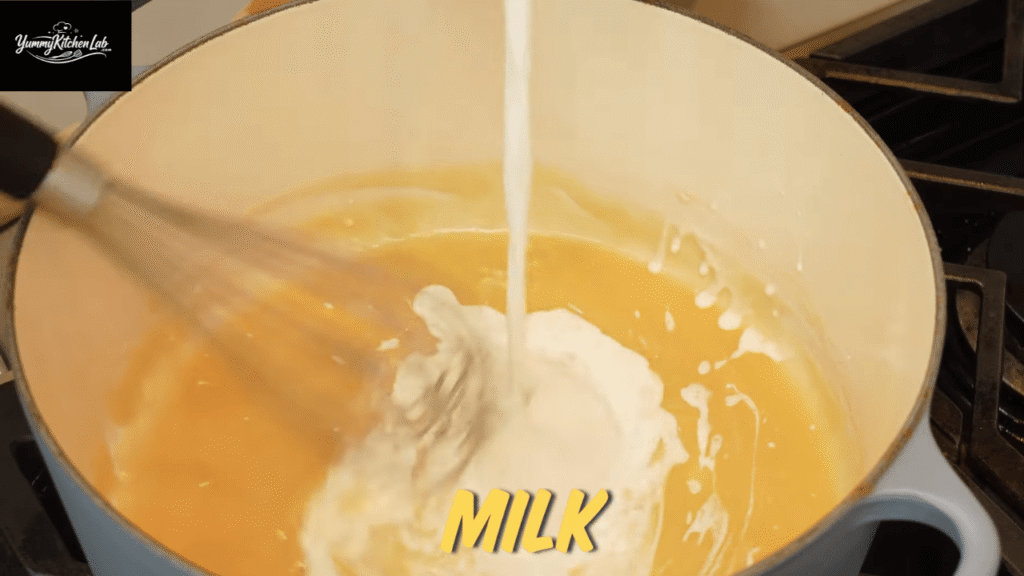
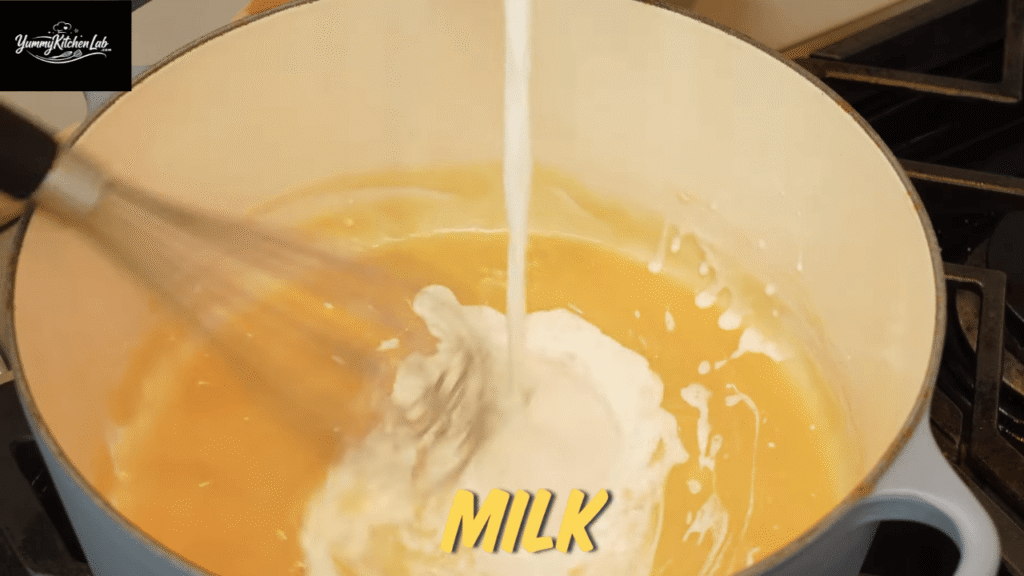
Step 2: Whisk in the Milk
Add the milk slowly, a little at a time, and whisk constantly as you pour. This gradual addition is the only thing standing between you and a lumpy soup. If you dump all the milk in at once, the roux seizes and clumps form that are genuinely hard to smooth out later. Keep whisking until the mixture is fully smooth and beginning to thicken. This is the same base technique used in béchamel, mac and cheese, and pretty much every classic creamy soup worth knowing. Nail this and you have a skill for life.
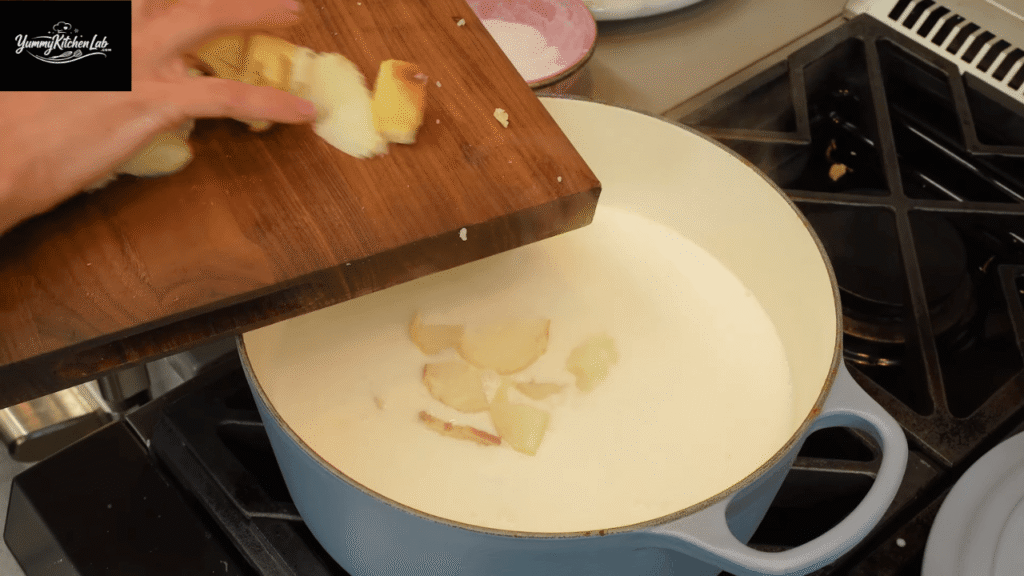
Step 3: Add the Potatoes and Simmer
Once the base is thick and smooth, add your diced russet potatoes directly into the pot. Stir everything together, bring it to a gentle simmer, and let it cook for about five minutes. You want the potatoes to soften enough to be easily mashed, but not so far gone that they are already falling apart before you get the chance. Keep the heat at a simmer, not a boil. A hard boil can scorch the milk base on the bottom of the pot, and that burnt flavor will work its way through the entire soup.
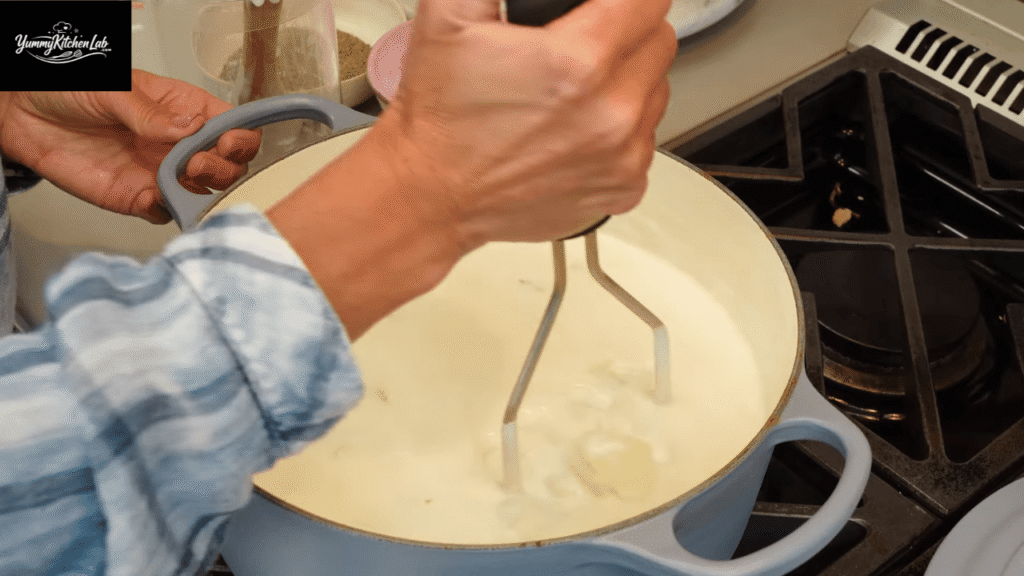
Step 4: Mash the Potatoes Partially
This is the step that actually makes the texture what it should be. Use a spoon, a fork, or a potato masher right in the pot and break the potatoes down partially. Do not aim for completely smooth. The goal is a mix of creamy mashed potato and small chunks throughout. Russets make this easy because they fall apart naturally with very little pressure. This partial mash gives the soup its thick, hearty body without needing any extra thickener or tricks.
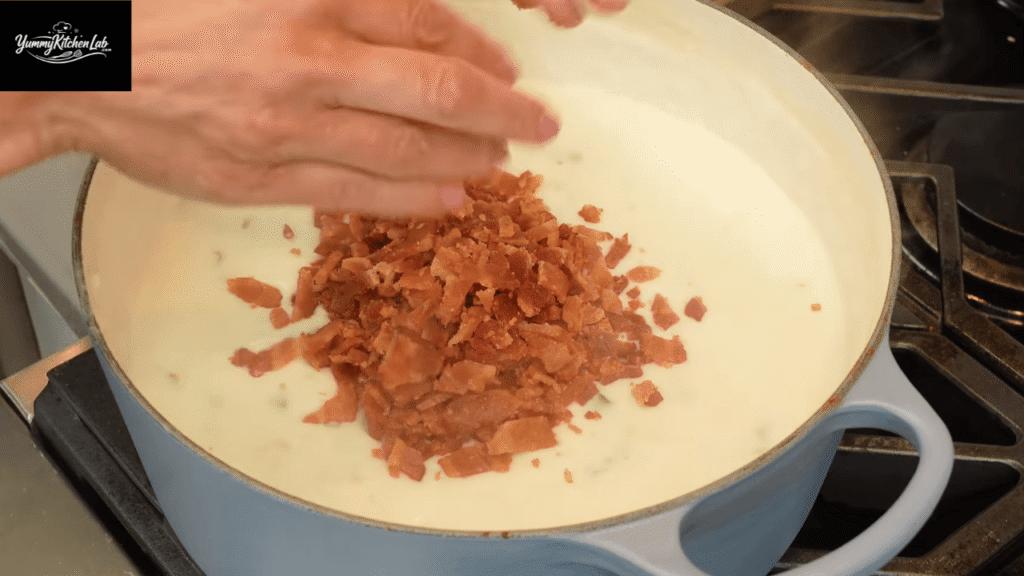
Step 5: Add the Bacon and Green Onions
Chop your cooked bacon and add most of it directly into the soup, holding back a handful for the topping. Then add your sliced green onions. Stir everything together and let it cook for another minute or two so the flavors have time to settle in together. At this point, the soup should smell deeply savory, with bacon, cream, and onion all doing their thing at the same time. If your kitchen does not smell like comfort food right now, something has gone wrong.
Step 6: Remove from Heat and Stir in Sour Cream
This is the most important technique moment in the entire recipe, and it is worth slowing down for. Take the pot completely off the heat before you add the sour cream. Stir it in gradually and keep stirring until it is fully incorporated and the soup looks smooth and glossy. Adding sour cream to an actively boiling soup causes the fat to separate and the texture to turn grainy. Removing the pot from the heat before adding it prevents all of that from happening.

Step 7: Season and Serve
Taste the soup before reaching for the salt shaker. The bacon and cheese both carry significant salt already, so you may need less than you think. Add salt cautiously, then finish with a generous crack of fresh black pepper. Ladle into bowls and top with the reserved bacon, a handful of shredded cheddar, and fresh green onion slices. If the soup feels a little too thick, a splash of chicken stock will loosen it right up without dulling any of the flavor.

Pro Tips to Make the Perfect Loaded Baked Potato Soup
A few small decisions separate a bowl that is just okay from one people ask about for weeks. Here are the tips that actually move the needle.
- Take the sour cream off the heat first. Sour cream breaks under high heat. Pull the pot off the burner, give it thirty seconds, then fold the sour cream in slowly. The texture stays silky every single time.
- Shred your own cheese. Block cheddar shredded fresh melts smoother than anything from a pre-shredded bag. The anti-caking coating on packaged shredded cheese does not behave well in hot soup, and the flavor is sharper when you grate it yourself.
- Use the bacon drippings in the base. Swap one tablespoon of the butter for bacon drippings when you build the roux. It adds a subtle smokiness that runs through the entire soup and ties the whole thing together.
- Do not skip the partial mash. A partial mash is what separates this soup from a thin broth with potato pieces floating in it. Break those potatoes down unevenly, aim for chunky and creamy at the same time.
- Use leftover mashed potatoes if you have them. Got a container of Thanksgiving mashed potatoes sitting in the fridge? Stir them directly into the cream base and adjust the consistency with a little milk or stock. Works perfectly and barely requires any extra effort.
- Control thickness with chicken stock. The roux-based cream thickens a lot as it sits, especially after refrigerating. A ladle of warm chicken stock stirred in will thin it back out without making the soup watery or bland.
- Always season at the end. With bacon and cheddar both in the pot, the salt level builds up fast. Taste first, season second, and add in small increments so you do not overshoot it.
- Warm your bowls before serving. A thick, hot soup cools down fast in a cold bowl. Run warm water into your bowls for about a minute before ladling in the soup. It is a small move that keeps everything at the right temperature longer.
Serving Ideas
This soup is rich and filling enough to work as a full meal on its own. But pairing it with the right thing or serving it in the right setting takes it from a good dinner to a great one. Here are four ways to make the most of it.
A Weeknight Dinner with Crusty Bread
A thick slice of sourdough or a crusty French baguette is genuinely useful here, not just a side dish. Toast it lightly and brush it with butter. The contrast of a crunchy crust against the creamy soup is one of the most satisfying combinations in comfort food cooking, full stop.
A Cold-Weather Gathering Starter
Serve this in smaller cups or mugs at a dinner party or casual cold-weather get-together. Set up a small topping station with extra bacon, cheese, sour cream, and green onions so guests can build their own bowl. It makes something simple feel a little more put-together without any extra cooking.
A Post-Holiday Leftover Meal
This soup was practically designed for leftover Thanksgiving mashed potatoes. Stir those leftovers directly into the cream base and you have a brand new dinner with almost zero effort. Pair it with leftover roast turkey or a simple side salad and you have a full meal sorted.
A Meal Prep Lunch Through the Week
This soup stores and reheats better than most creamy soups do. Make a full pot on Sunday, portion it into containers, and you have lunches covered for the week. Reheat gently on the stove with a splash of milk or chicken stock, and always add fresh toppings after reheating so they stay crisp.
For presentation, serve in deep, wide bowls that give the toppings enough room to be visible. A white or neutral bowl makes the contrast of the golden cheese, dark bacon, and bright green onions pop. A crack of fresh black pepper across the top adds a clean visual finish without any extra effort.
Frequently Asked Questions
Can I make this soup ahead of time?
Yes, and it actually works well as a make-ahead dish. Cook the soup fully but hold back the sour cream until you are ready to serve. When reheating, warm it gently over low heat, pull the pot off the burner, then fold in the sour cream. Add fresh toppings right before serving and it will taste like you just made it.
Can I use a different type of potato?
Russets are the best option because of their high starch content and how easily they break down into that creamy base. Yukon Golds are a reasonable substitute and will give you a slightly richer, less fluffy result. Red potatoes will stay firmer and produce a chunkier, brothier soup. Not the same thing, but still good if that is what you have on hand.
Why did my soup turn out lumpy?
Lumps usually form in one of two places: the flour was not fully incorporated into the butter before the milk went in, or the milk was added too quickly. Slow, steady whisking at both stages prevents this completely. If you end up with lumps anyway, a quick pass with an immersion blender will smooth things out. Just do not overblend or you will lose the potato texture entirely.
How do I store and reheat leftovers?
Store in an airtight container in the refrigerator for up to five days. Reheat on the stove over low to medium heat and stir frequently. Add a splash of milk or chicken stock if the soup has thickened too much overnight. Avoid blasting it in the microwave at full power because the dairy can separate if it heats too fast.
Can I make this gluten-free?
Absolutely. Swap the all-purpose flour for a 1:1 gluten-free flour blend, or mix cornstarch with a little cold milk and add it as a slurry directly to the simmering soup. Cornstarch gives a glossier, slightly silkier result rather than the heartier body you get from a roux, but both versions taste great.
Wrapping It Up
Loaded baked potato soup is one of those recipes that earns a permanent spot in your rotation. It is straightforward enough for a weeknight but satisfying enough to serve to guests. The keys are building a proper roux, using russet potatoes for the right texture, and always adding the sour cream off the heat. Get those three things right and the rest takes care of itself.
Give it a shot this week, especially if the temperatures are dropping where you are. And if you try the leftover mashed potato version, you might never go back to making it the standard way again. What do you think? Drop your results or questions in the comments below.

outback potato soup recipe
Ingredients
- 4 tablespoons unsalted butter
- 3 tablespoons all-purpose flour
- 3 cups whole milk
- 4 medium russet potatoes, peeled and diced
- 12 slices bacon, cooked and chopped
- 1½ cups sharp cheddar cheese, shredded (plus extra for topping)
- ½ cup sour cream
- 4 green onions, sliced (plus extra for topping)
- Salt and black pepper to taste
- Chicken stock, optional, for adjusting consistency
Instructions
- Melt butter in a large pot over medium heat.
- Whisk in flour and cook for 1 minute until smooth and pale.
- Add milk slowly, whisking constantly, until thick and smooth.
- Add diced potatoes and simmer for 5 minutes until tender.
- Partially mash potatoes in the pot using a spoon or masher.
- Stir in most of the bacon and the green onions.
- Remove from heat and fold in sour cream until smooth.
- Stir in shredded cheddar until fully melted.
- Season with salt and pepper to taste.
- Ladle into bowls and top with reserved bacon, cheese, and green onions.
Video
Notes
- Always add sour cream off the heat to prevent curdling.
- Add a splash of chicken stock if the soup thickens too much.
- Leftover mashed potatoes can replace fresh potatoes in a pinch.
- Stores in the refrigerator for up to 5 days. Reheat gently on the stovetop with a little milk.