

Look, I’m not here to oversell you on another “easy weeknight dinner.” But crack slaw? This one actually earns that title. It’s one pan, thirty minutes, and a handful of ingredients that you probably already have sitting in your fridge right now. The result is a savory, slightly spicy, deeply satisfying dish that honestly punches way above its weight class.
- Ingredients for Crack Slaw
- Garlic
- Yellow Onion
- Green Onions
- Fresh Ginger
- Ground Pork
- Toasted Sesame Oil
- Cabbage
- Soy Sauce
- Rice Vinegar
- Sriracha
- Toasted Sesame Seeds
- How to Make Crack Slaw (Step by Step)
- Step 1: Prep Your Aromatics
- Step 2: Build the Aromatic Base
- Step 3: Brown the Ground Pork
- Step 4: Add the Cabbage
- Step 5: Add the Sriracha
- Step 6: Plate and Garnish
- Pro Tips to Make the Perfect Crack Slaw
- Serving Ideas
- Frequently Asked Questions
- Can I make crack slaw with ground chicken or turkey instead of pork?
- Can I make this ahead of time?
- How do I make it less spicy?
- Do I need a cast iron pan?
- Why is my cabbage soggy?
- Quick Wrap-Up
- Crack Slaw
Once you make it the first time, you’ll get it. The flavor is bold, the texture is on point, and cleanup is almost embarrassingly easy. This crack slaw recipe is the kind of thing you’ll have on rotation before the week is out.
“It’s called crack slaw not because it has addictive properties — that’s a myth. It’s because cabbage has a tendency to crack under pressure.”
That little origin story pretty much captures the vibe of this dish. The name is goofy, but the recipe is genuinely solid. It’s a stir-fried combo of ground pork, cabbage, garlic, ginger, and a punchy soy-sriracha sauce that comes together faster than most people expect.
Think of it as the halfway point between a stir fry and a warm salad. It’s low fuss, high flavor, and wildly adaptable once you get the hang of the base recipe. Let’s get into it.

Ingredients for Crack Slaw
The ingredient list is short, but don’t let that fool you. Every single item here has a job to do, and using the right version of each one makes a real difference in the final dish.
Garlic
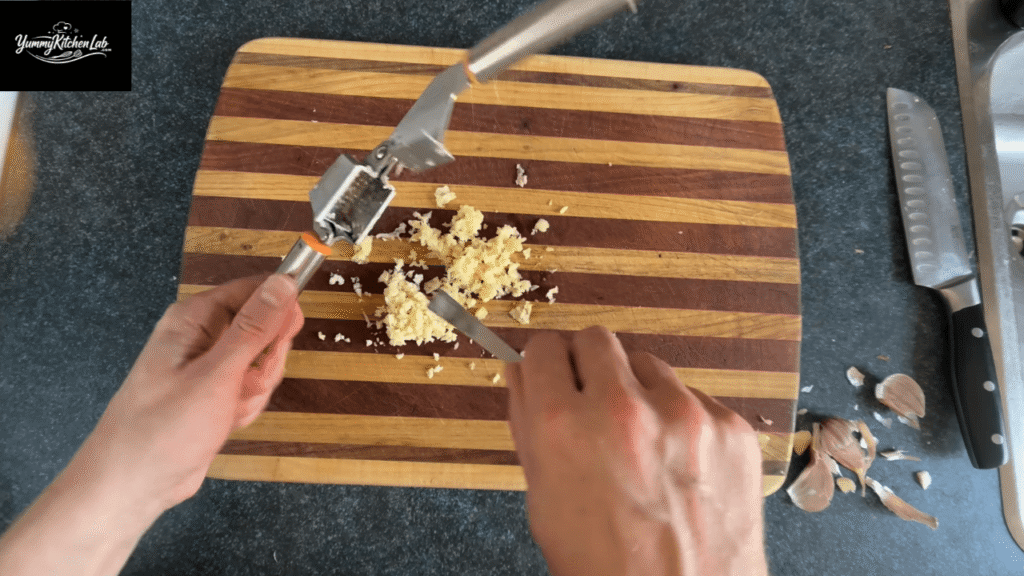
Use at least three cloves, and honestly consider using more. Fresh garlic is non-negotiable here. The jarred stuff has already lost most of its sharp, pungent punch by the time it reaches your pan, and this dish needs that intensity. If you have a garlic press, pull it out. It gives you a finer texture that blends into the dish way more evenly than rough hand-mincing. The most common mistake people make with this recipe is being shy with the garlic. Don’t be.
Yellow Onion
A small yellow onion adds mild sweetness and body to the aromatic base. Yellow onions are the right call because they soften and sweeten as they cook without bulldozing the other flavors. White onions can substitute, though they stay a bit sharper. Red onions will discolor the dish and bring a slightly bitter note that just doesn’t belong here. Chop it fine so it cooks evenly alongside the garlic.
Green Onions
Green onions are doing double duty in this recipe, and I love them for it. The white ends go into the pan early with the aromatics, adding another savory layer to the base. The green tops get saved for the end as a garnish, bringing freshness and a pop of color. Don’t skip them. They’re one of the small details that keep this dish from looking and tasting flat.
Fresh Ginger
FYI, this is not the moment to reach for the dried powdered stuff. Fresh ginger, grated right before cooking, gives the dish a bright and slightly warming edge that powdered ginger simply cannot replicate. About half a teaspoon is the sweet spot. Grate it with the peel on since it’s easier and the peel dissolves completely in the hot pan. The only thing to watch is quantity because too much ginger will start competing with the pork instead of complementing it.
Ground Pork
A pound of ground pork is the protein of choice here, and for good reason. Pork has enough natural fat to brown properly in a hot pan without needing extra oil, and it soaks up soy and sesame flavors beautifully. Ground chicken or turkey can work as a substitute if that’s what you have, but the dish will be noticeably leaner and a little less rich. Ground beef works in a pinch but shifts the flavor profile into different territory. If you can find 80/20 ground pork, grab it. The fat content genuinely matters for texture.
Toasted Sesame Oil
Two teaspoons of toasted sesame oil go into the pan first, and they set the flavor tone for everything that follows. Here’s the thing: toasted sesame oil and untoasted sesame oil are not the same product at all. Toasted has a deep, nutty richness that untoasted completely lacks. Use it as your cooking fat for the aromatics and don’t stress about adding a tiny bit more if you want to. Just keep the heat at medium because extended high heat can turn sesame oil bitter, and that’s not what we’re after.
Cabbage
You’ve got real flexibility here, which I appreciate in a recipe. Green cabbage is the classic choice and holds up well to heat. Purple cabbage adds color and a slightly different texture. A bag of pre-shredded coleslaw mix from the supermarket works just as well and saves you prep time. Most mixes also include a little carrot and red cabbage, which adds nice variety. Whatever you choose, don’t shred it too small. Larger pieces hold their texture better after cooking, which is exactly what you want.
Soy Sauce
Three tablespoons of soy sauce bring the salt and umami that ties the whole dish together. Regular soy sauce works perfectly. Low-sodium soy sauce is fine if you’re watching your intake, but taste at the end and add a pinch of salt if needed. Tamari is a solid gluten-free option with a slightly richer flavor. One thing I’d steer clear of: substituting coconut aminos one-for-one. The flavor is noticeably sweeter and it throws the whole dish off balance.
Rice Vinegar
One tablespoon of rice vinegar cuts through the richness of the pork and brightens the whole dish in a quiet but important way. It doesn’t announce itself, but you’d notice if it was missing. Apple cider vinegar is the closest substitute if you’re out. White wine vinegar works too, though it’s slightly sharper, so dial it back just a touch.
Sriracha
This is where the dish gets its kick, and it’s more than just heat. Sriracha brings a garlicky tang that works perfectly with the soy and sesame. A tablespoon gives you a solid, noticeable kick without going overboard. If you’re cooking for heat-sensitive eaters, start with half and adjust. Sambal oelek is a great substitute if you want a more straightforward chile heat with less sweetness. Don’t skip the hot sauce entirely though. It does way more than just add spice.
Toasted Sesame Seeds
These go on at the very end as a garnish, but they’re not just decorative. Toasted sesame seeds add crunch, visual contrast, and a nutty finish that makes the dish feel complete. Buy them pre-toasted if you can. If you’re toasting raw seeds yourself, keep a close eye on them because they go from perfectly golden to burnt in about thirty seconds flat.
How to Make Crack Slaw (Step by Step)
Step 1: Prep Your Aromatics
Mince three garlic cloves and chop one small yellow onion. Trim the green onions and keep the white ends separate from the green tops. The white parts go into the pan now, and the green tops get saved for garnish at the end. Grate about half a teaspoon of fresh ginger using a microplane or fine grater. Getting all of this done before anything hits the pan makes the whole cooking process smooth and stress-free.
Step 2: Build the Aromatic Base
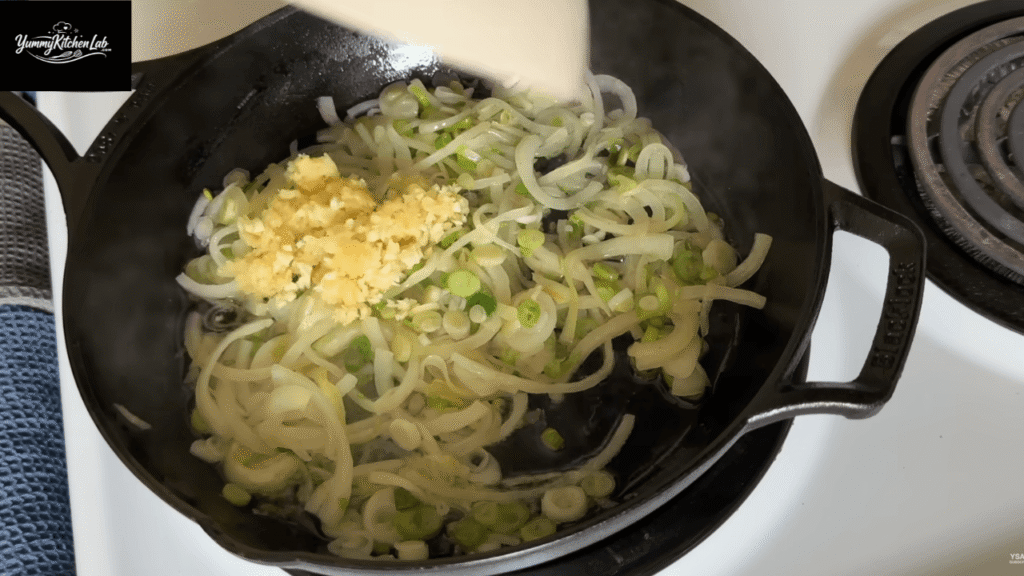
Heat two teaspoons of toasted sesame oil in a large cast iron pan over medium heat. Once the oil starts to shimmer, add the yellow onion, white ends of the green onion, and minced garlic. Stir occasionally and let everything cook until soft and fragrant. This step is building the flavor foundation for everything else, so don’t crank the heat up to try and speed it along. Low and slow wins this round.
Step 3: Brown the Ground Pork
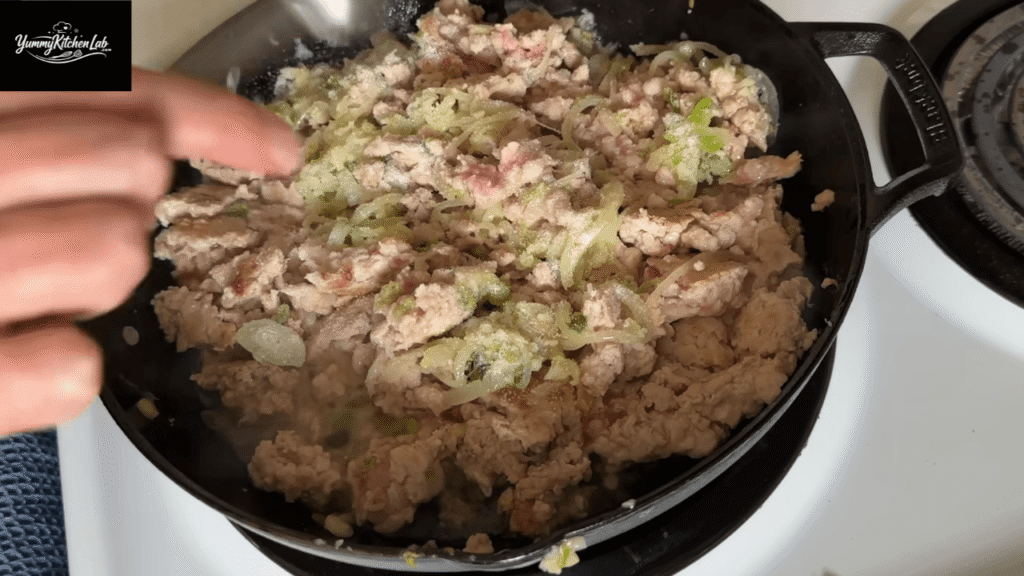
Push the aromatics to one side of the pan and add the pound of ground pork. Break it up with a spoon or spatula, then let it start to brown before you mix it into the aromatics. Add the grated ginger, a generous amount of black pepper, and a teaspoon of salt while it cooks. The goal here is browning, not steaming. Resist the urge to stir constantly. Let the meat sit undisturbed for a minute or two at a time so it actually develops some color.
Step 4: Add the Cabbage
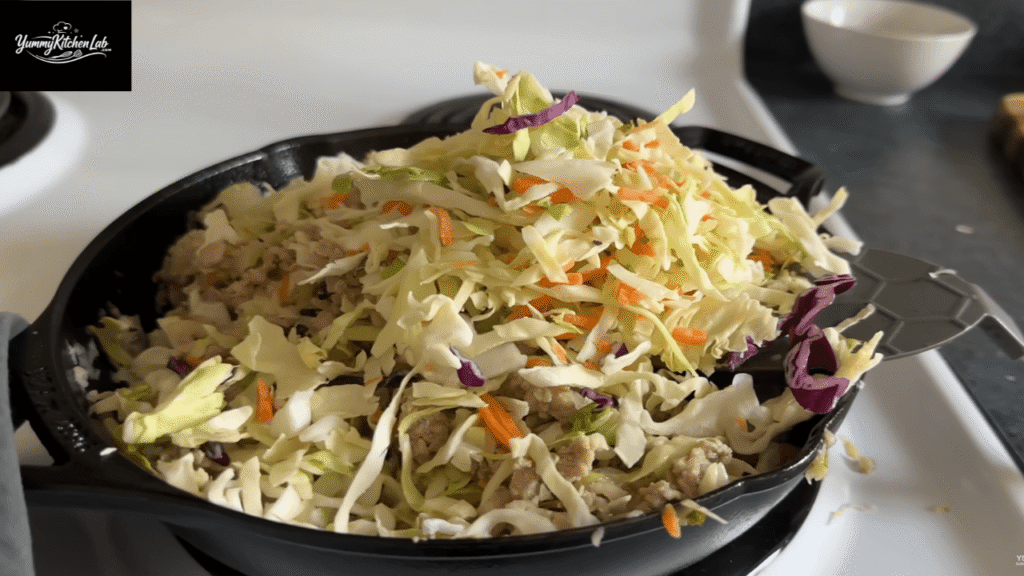
Once the pork is mostly cooked through, it’s time for the cabbage. I won’t lie to you: the first time you add it, it looks like way too much for the pan. It is a lot. Use a folding and tucking technique, working the cabbage down gradually as the bottom layers wilt and make room. Pour in three tablespoons of soy sauce and one tablespoon of rice vinegar, then keep folding everything together until the cabbage is tender but still has a little bite to it.
Step 5: Add the Sriracha
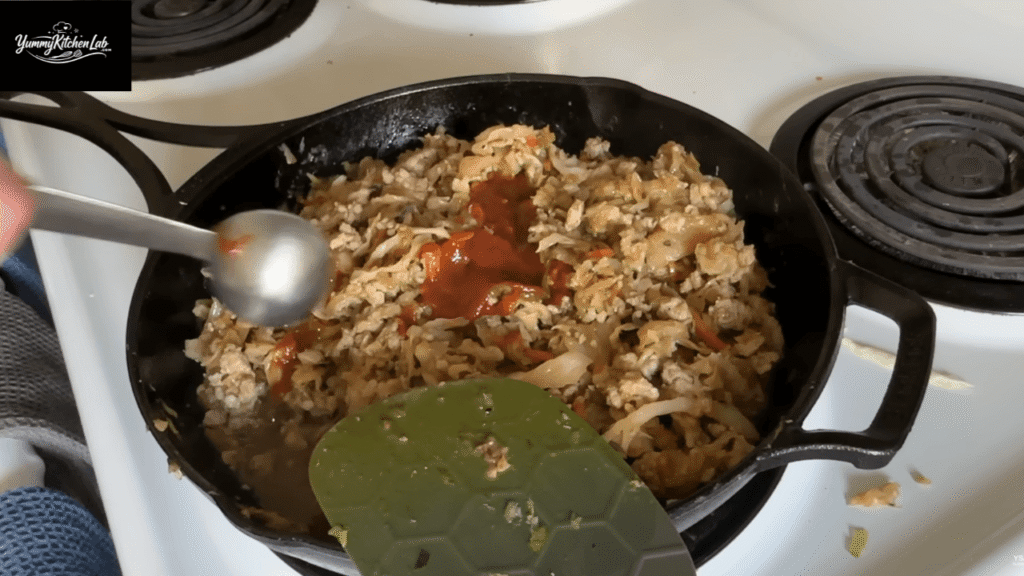
Once the cabbage is cooked to your liking, stir in a tablespoon of sriracha and toss everything together one final time. Adding the sriracha at the end is important because it preserves the brightness and keeps the heat from mellowing too much during cooking. Taste everything at this point and adjust the salt or heat as needed. This is your last shot to get the seasoning right before it hits the bowl.
Step 6: Plate and Garnish
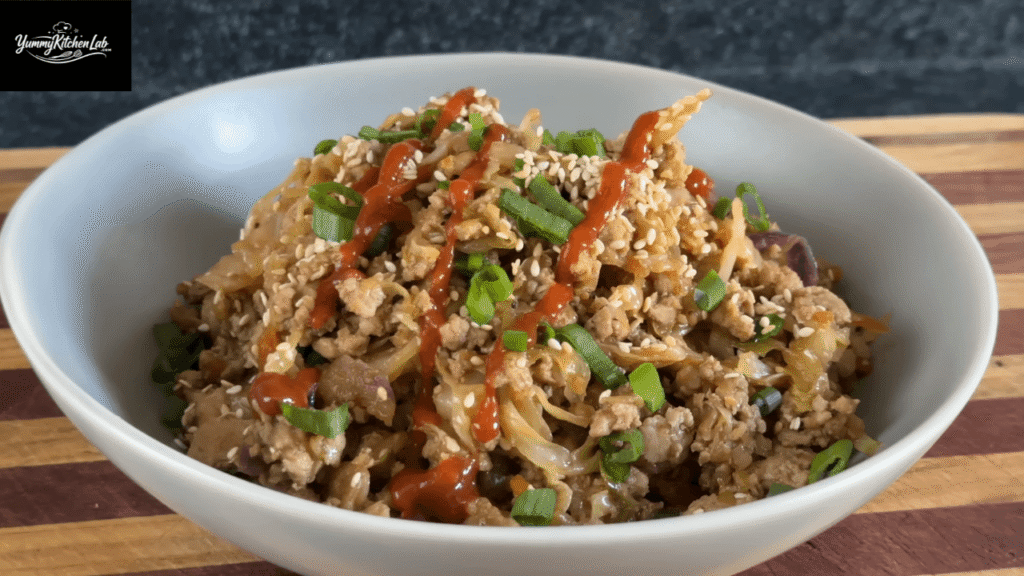
Spoon the crack slaw into a bowl and top it with the reserved green onion tops, toasted sesame seeds, and a couple of extra sriracha drizzles. The garnishes are not optional. They add freshness, crunch, and color that the cooked dish genuinely needs to feel finished.
Pro Tips to Make the Perfect Crack Slaw
A few small details separate a good crack slaw from one you’ll be thinking about for days. These are the things worth paying attention to before you start cooking.
Don’t overcrowd the pan. If your pan is too small to hold the cabbage properly, it will steam instead of sauté and the texture will suffer. A large cast iron or wide stainless pan gives you the surface area you need.
Pull the cabbage off the heat a little early. It keeps cooking from residual heat after you stop, and you want some texture left in the final dish. Fully limp cabbage makes the whole thing feel heavy and sad.
Season in layers, not all at once. Add salt when the pork goes in, not just at the end. Building seasoning at multiple points creates more depth than one big dump at the finish line.
Fresh ginger only. Powdered ginger and fresh ginger are genuinely different ingredients. Fresh gives you a clean, bright heat. Powdered brings a warmer and earthier note that takes the dish in a direction it doesn’t need to go.
Let the pork actually brown. Stirring constantly after the meat hits the pan is a classic mistake. Let it sit undisturbed for a full minute or two so it develops real color. Brown meat means better flavor, full stop.
Start with sesame oil, don’t finish with it. Using toasted sesame oil as your cooking fat from the beginning gives the dish a more integrated, even sesame flavor. Adding it at the end tends to feel heavy and one-note.
Taste before you plate. Soy sauce salt levels vary wildly between brands. Always taste the dish before it leaves the pan and adjust with a small pinch of salt or a splash more rice vinegar if needed.
The bag of coleslaw mix is not cheating. Pre-shredded coleslaw mix from the supermarket works just as well as hand-cut cabbage and saves you real prep time. The carrot and red cabbage in most mixes add a nice textural bonus too.
Serving Ideas
Crack slaw is a complete meal on its own, but it’s also flexible enough to work in a few different formats depending on your mood or your crowd.
Weeknight Solo Bowl
Serve it as a one-bowl meal with a side of steamed jasmine rice. The rice soaks up all the pan juices and rounds out the dish in the most satisfying way. This is the fastest and most practical version of the meal, and honestly the one I go back to most often.
Lettuce Wrap Filling
Spoon it into large butter lettuce or romaine leaves and eat it like a handheld wrap. The cool crunch of the fresh lettuce against the warm, seasoned meat and cabbage creates a contrast that makes the dish feel lighter and more dynamic. IMO, this version is underrated.
Meal Prep Staple
Crack slaw stores really well and reheats without losing much. Pack it into containers for lunches throughout the week, either on its own or over cauliflower rice if you’re eating lower carb. The flavors actually get a little deeper by the next day, which is always a win.
Build-Your-Own Bowls
Set it out alongside white rice, sliced cucumber, shredded carrots, and extra sriracha and let people build their own bowls. It scales easily, the toppings can vary by preference, and it’s a low-effort way to feed a small group without standing at the stove all night.
For presentation, use a wide shallow bowl rather than a deep one. It shows off the texture and garnishes much better. Drizzle the sriracha in thin lines instead of dropping it in a blob because it distributes more evenly and looks a lot more intentional.
Frequently Asked Questions
Can I make crack slaw with ground chicken or turkey instead of pork?
Yes, both work as substitutes. Ground chicken and turkey are leaner, so the dish will be slightly less rich overall. Add an extra half teaspoon of sesame oil to make up for the reduced fat, and be careful not to overcook the meat since leaner proteins dry out faster than pork does.
Can I make this ahead of time?
Crack slaw holds well in the refrigerator for up to four days in a sealed container. Reheat it in a pan over medium heat rather than the microwave to keep the cabbage from getting mushy. The flavors actually improve slightly after sitting overnight, which makes it one of the better meal prep options in this style of cooking.
How do I make it less spicy?
Start with half a tablespoon of sriracha instead of a full one, or leave it out of the cooked dish entirely and serve it on the side so people can add their own. The dish still has plenty of flavor from the soy, sesame, garlic, and ginger even without the heat.
Do I need a cast iron pan?
Nope. A large stainless steel skillet or a wide nonstick pan both get the job done. Cast iron holds heat well and browns meat evenly, which is why it’s the preference here. The most important thing is that whatever pan you use is large enough to hold the cabbage without it piling up too high.
Why is my cabbage soggy?
Two likely culprits. Either the heat was too low and the cabbage steamed instead of sautéed, or you stirred it too constantly and it never had time to cook off its moisture. Use medium-high heat and let the cabbage sit in contact with the hot pan for stretches of time rather than moving it around constantly.
Quick Wrap-Up
Crack slaw is one of those recipes that earns a permanent spot in your kitchen without asking for much in return. One pan, simple ingredients, thirty minutes, and you’ve got a meal that’s genuinely satisfying on every level. Whether you serve it over rice, stuff it into lettuce wraps, or eat it straight from the pan standing at the stove (no judgment), it delivers every single time.
The keys are browning your pork properly, not overcrowding the pan, and adding the sriracha at the end where it does the most good. Nail those three things and you’re golden.
Give it a shot this week. I’d bet good money it won’t be your last time making it.

Crack Slaw
Ingredients
- 3 cloves garlic, minced
- 1 small yellow onion, chopped
- 4 green onions (white and green ends separated)
- ½ tsp fresh ginger, grated
- 2 tsp toasted sesame oil
- 1 lb ground pork
- 1 tsp salt
- Black pepper to taste
- ½ head green cabbage, shredded (or 1 bag coleslaw mix)
- 3 tbsp soy sauce
- 1 tbsp rice vinegar
- 1 tbsp sriracha
- Toasted sesame seeds, for garnish
Instructions
- Prep garlic, onion, green onion whites, and grated ginger before cooking.
- Heat sesame oil in a large pan over medium heat.
- Add yellow onion, green onion whites, and garlic. Cook until soft and fragrant.
- Push aromatics aside. Add ground pork, salt, pepper, and ginger. Brown the meat, breaking it up as it cooks.
- Add cabbage to the pan. Fold it in gradually as it wilts.
- Pour in soy sauce and rice vinegar. Stir to combine.
- Add sriracha and toss everything together. Taste and adjust seasoning.
- Plate and garnish with green onion tops, sesame seeds, and extra sriracha.
Video
Notes
- Coleslaw mix from a bag substitutes well for hand-shredded cabbage.
- Store leftovers in a sealed container for up to 4 days. Reheat in a pan, not a microwave.
- For less heat, reduce sriracha to ½ tablespoon or serve it on the side.