

Okay, real talk. If you’ve been sleeping on crab balls, today is the day that changes. These little golden bites are crispy on the outside, soft and crab-packed on the inside, and honestly? They go fast. Like, embarrassingly fast. This southern crab balls recipe is the kind of thing you make once and then get voluntold to bring to every gathering forever.
- Where Do Southern Crab Balls Come From?
- Ingredients for Southern Crab Balls
- Crab Meat
- Panko Bread Crumbs
- Mayonnaise
- Dijon Mustard
- Cayenne Pepper
- Lemon Juice
- Green Onion and Red Onion
- Eggs
- Salt and Black Pepper
- How to Make Southern Crab Balls (Step by Step)
- Step 1: Whisk Your Eggs Until Frothy
- Step 2: Build Your Batter Base
- Step 3: Fold In the Panko
- Step 4: Add the Crab Meat
- Step 5: Chill the Mixture
- Step 6: Form the Balls
- Step 7: Fry to Color
- Step 8: Drain and Rest
- Pro Tips to Make the Perfect Southern Crab Balls
- Serving Ideas
- Can I use imitation crab meat instead of real crab?
- What oil works best for frying crab balls?
- Can I make the batter the night before?
- Why are my crab balls falling apart in the oil?
- Can I bake these instead of frying?
- Wrapping It Up
- crab balls recipe
The best part? The ingredient list is short. No fancy equipment, no hard-to-find items, no culinary degree required. Just good crab, a solid batter, and hot oil doing its thing.
“Not a whole lot of ingredients, especially for the end result — this right here is fire.”
That quote is not exaggerating. This recipe proves you don’t need a mile-long ingredient list to create something people will actually talk about. Let the crab shine, keep the technique simple, and the results take care of themselves.
Where Do Southern Crab Balls Come From?
Southern crab balls are basically the love child of two coastal classics: the crab cake and the Louisiana beignet. The beignet is a deep-fried staple that’s been a cornerstone of southern cooking forever, especially in Louisiana. When you take that concept and load it up with lump crab meat, creole mustard, and a hit of cayenne, you get something that feels rooted, comforting, and genuinely delicious.
This version stays true to those roots while keeping things practical. You’re not spending all afternoon in the kitchen. You’re making something that tastes like you did.
Ingredients for Southern Crab Balls
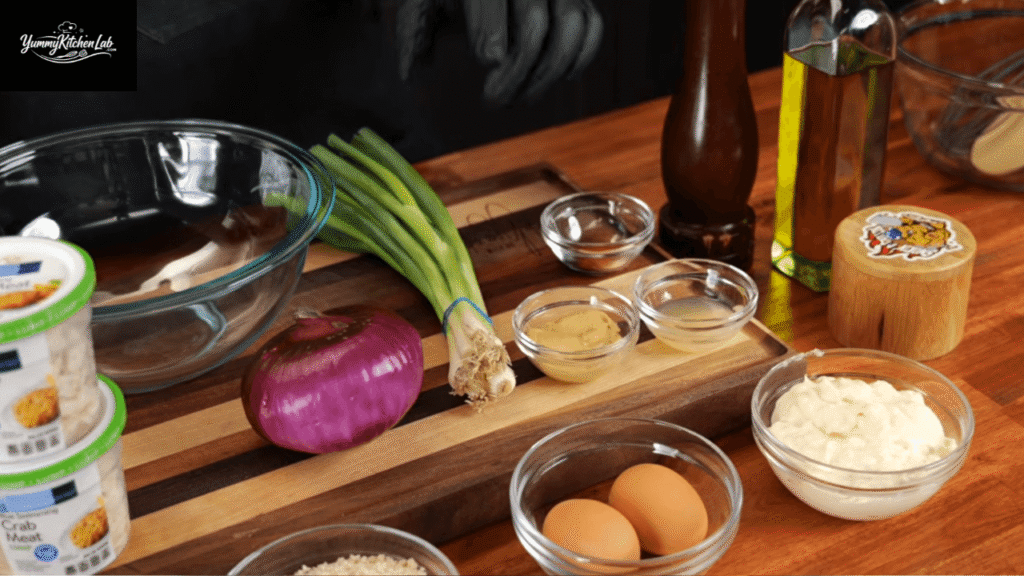
Before you start mixing, take a second to look at everything laid out in front of you. Every ingredient in this recipe has a specific job, and knowing why each one is there helps you make smart adjustments when needed.
Crab Meat
This is the whole point of the recipe, so don’t cut corners here. Lump or jumbo lump canned crab meat is the move. It has enough texture to stay visible and present in every bite rather than blending into the batter. Imitation crab is not a substitute worth trying here.
It’s too wet, too rubbery, and it just doesn’t taste right once everything comes together. Before you fold it in, break it apart gently with your fingers. You want actual pieces of crab in there, not a paste.
Panko Bread Crumbs
Panko is the unsung hero of this recipe. The larger, flakier crumbs absorb moisture without getting gummy, which is what keeps the inside of these crab balls light instead of dense.
Regular fine breadcrumbs are a downgrade here, FYI. They tend to make the interior heavy and almost doughy. If panko is all you have, great. If you only have fine crumbs, use a little less and watch your batter consistency carefully.
Mayonnaise
Mayo is doing two jobs at once: it keeps the inside moist and helps bind everything together. Full-fat mayo is non-negotiable. Light versions carry more water, which makes your batter too loose to hold a ball shape. If you want a southern-style option with a little more personality, Duke’s is a solid pick. That said, any full-fat mayo on your shelf will work just fine.
Dijon Mustard
The original recipe uses creole mustard, which is coarser and tangier than dijon. If you can find creole mustard, grab it. It adds a texture and bite that dijon doesn’t quite replicate. But dijon is a genuinely good substitute and delivers the sharpness the recipe needs. Just don’t swap in yellow mustard. It’s too sweet and too mild to balance out the richness of everything else in the bowl.
Cayenne Pepper
One pinch. That’s it. Cayenne adds a background warmth that makes the whole thing more interesting, but going heavy on it your first time is a classic mistake. Start with a pinch, taste the batter after everything is mixed, and adjust from there. You can always go bigger next time when you know what you’re working with.
Lemon Juice
Fresh lemon juice lifts everything. It cuts through the richness of the mayo and adds a brightness that makes each bite feel cleaner. Bottled juice technically works, but fresh is noticeably better here. Half a lemon is all you need, and it makes a real difference.
Green Onion and Red Onion
Using both is a smart call. Green onion brings a mild, fresh flavor that doesn’t compete with the crab. Red onion adds a slightly sharper, earthier note and gives the finished ball some visual interest. Dice both small. The onion should season the mixture, not take it over. If you’re biting into a chunk of onion, you went too big on the dice.
Eggs
Two eggs go in first, and they get whisked until they’re light and a little frothy before anything else touches the bowl. This matters more than it seems. Well-whisked eggs incorporate more evenly and help the panko bind without weighing the batter down. Don’t just crack them in and stir twice. Give them a real 30-second whisk.
Salt and Black Pepper
Just enough to finish the seasoning. A small pinch of kosher salt and about half a teaspoon of freshly cracked black pepper is the right range. The crab, mustard, and cayenne are already carrying the flavor load. You’re seasoning here, not starting from scratch.
How to Make Southern Crab Balls (Step by Step)
Step 1: Whisk Your Eggs Until Frothy
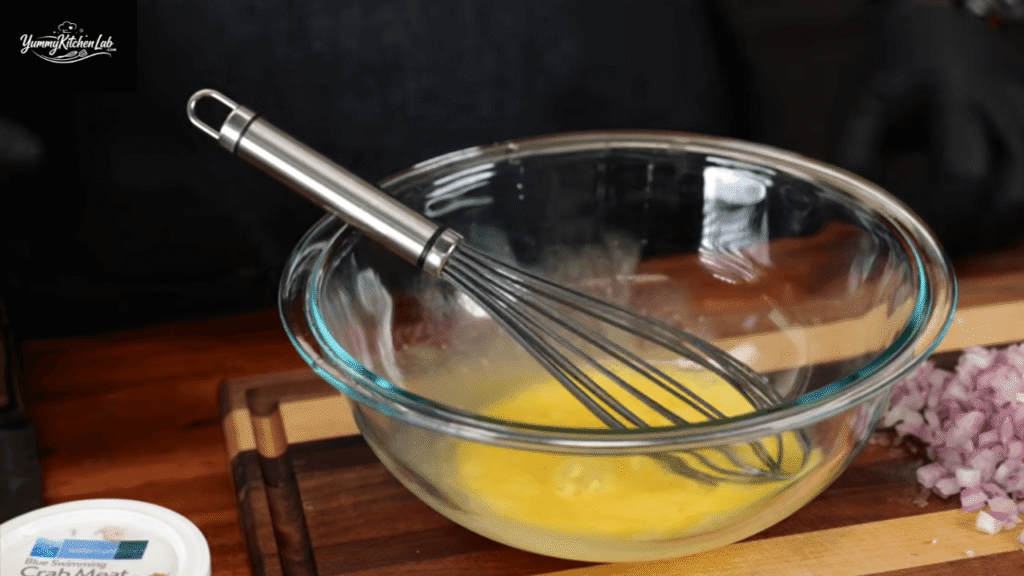
Crack both eggs into a large mixing bowl and whisk them for a solid 30 to 45 seconds until they look light and slightly foamy. It’s a small step that people skip, but it genuinely affects the final texture. Well-beaten eggs help the batter stay cohesive when the crab balls hit the hot oil.
Step 2: Build Your Batter Base
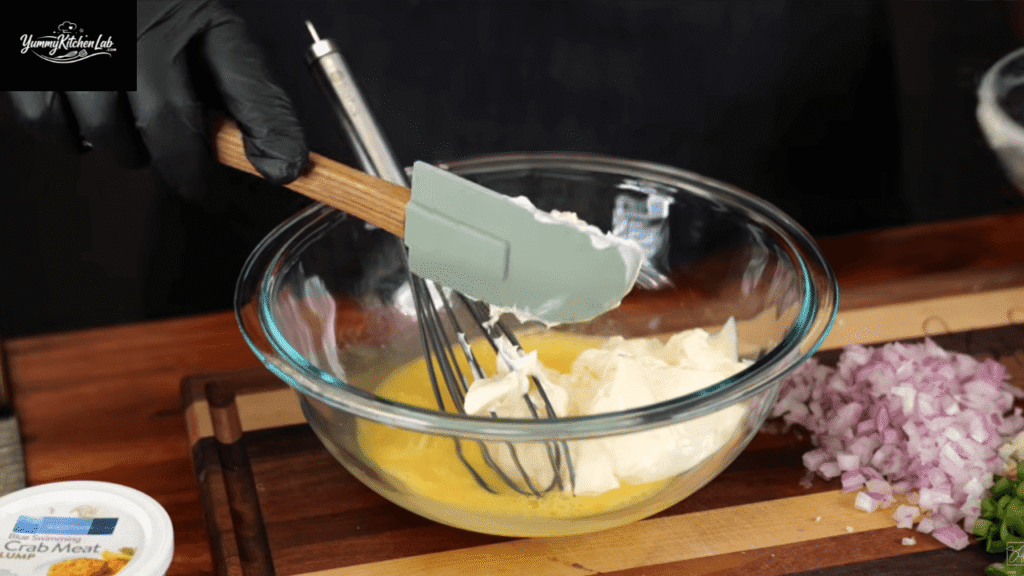
Add the mayo and dijon mustard to your eggs and stir until everything looks smooth. Then add the cayenne, lemon juice, green onion, red onion, salt, and black pepper, mixing gently after each addition. You’re building a base that should look consistent and well-seasoned before the panko and crab go anywhere near it.
Step 3: Fold In the Panko
Pour in your panko and fold it in gently rather than stirring it hard. You want the crumbs to absorb the liquid without the batter getting overworked. It’ll start to thicken up as the panko soaks in, and that’s exactly what you’re looking for. If it still seems a little wet after folding, add a small amount of extra panko and fold again.
Step 4: Add the Crab Meat
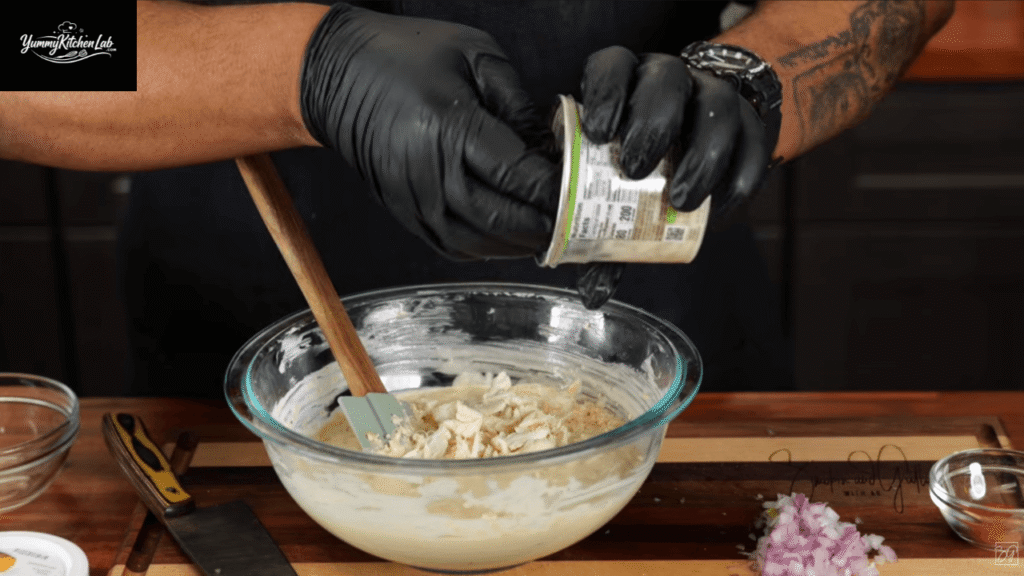
Break the crab meat apart gently with your fingers over the bowl and fold it in slowly. Don’t stir it. Fold it. You want visible pieces of crab throughout the batter, not a uniform mush. Both cans go in here, and this is where the mixture really starts to look like something worth getting excited about.
Step 5: Chill the Mixture
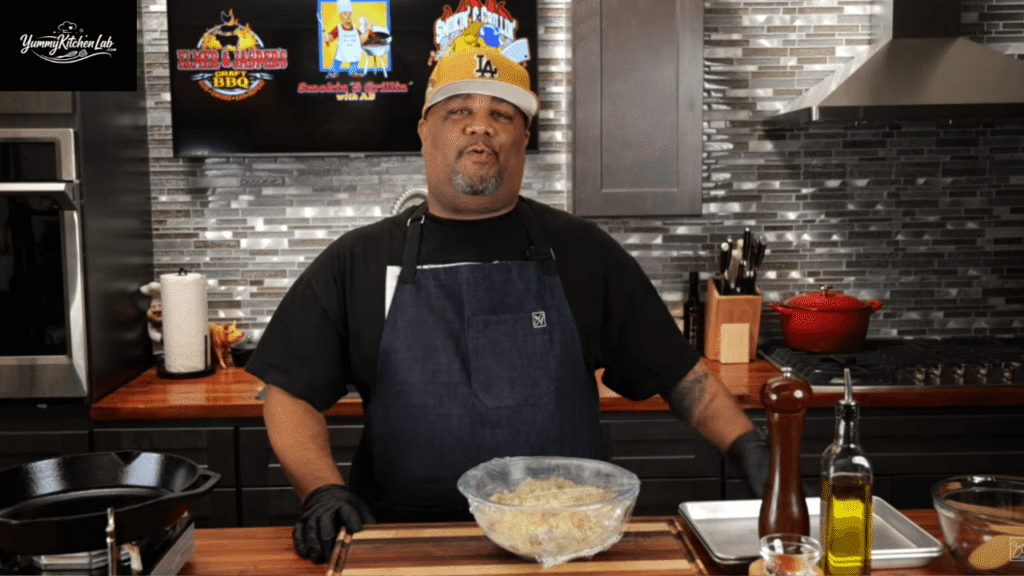
Cover the bowl tightly with plastic wrap and put it in the refrigerator for at least one hour. Two hours is better. This step is not optional. The chill firms up the mixture so your crab balls actually hold their shape when you form them and stay together in the oil. Skip this step and you’ll end up with flat, sad little blobs. Been there. Don’t do it.
Step 6: Form the Balls
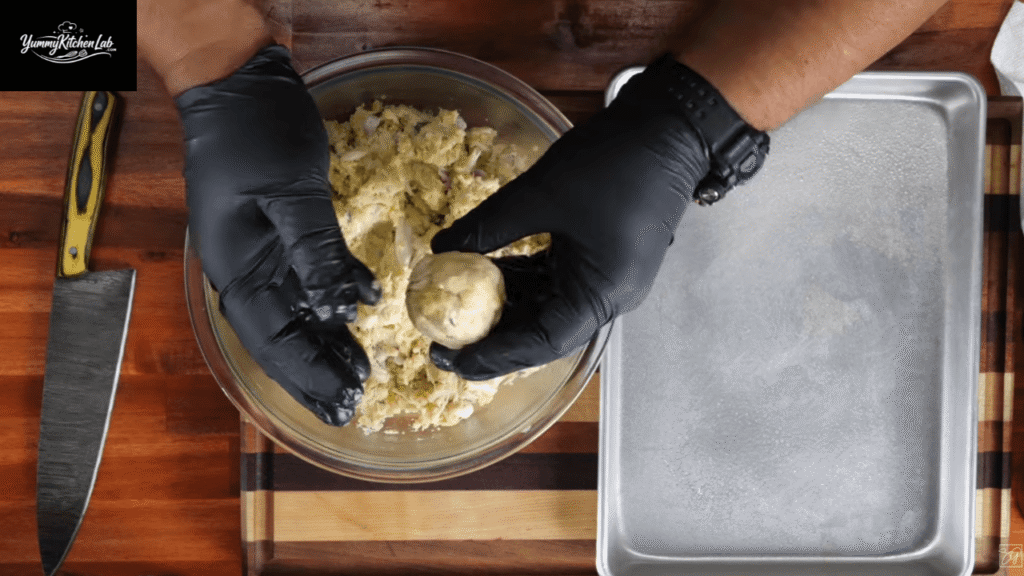
Scoop the chilled mixture and roll it gently between your palms into balls roughly the size of a golf ball. The word “gently” is doing a lot of work in that sentence. You’re not trying to compress the mixture tight. You want the ball to hold its shape while still feeling slightly light. A dense, over-packed ball fries up heavy. Keep your portions consistent so everything finishes cooking at the same time.
Step 7: Fry to Color
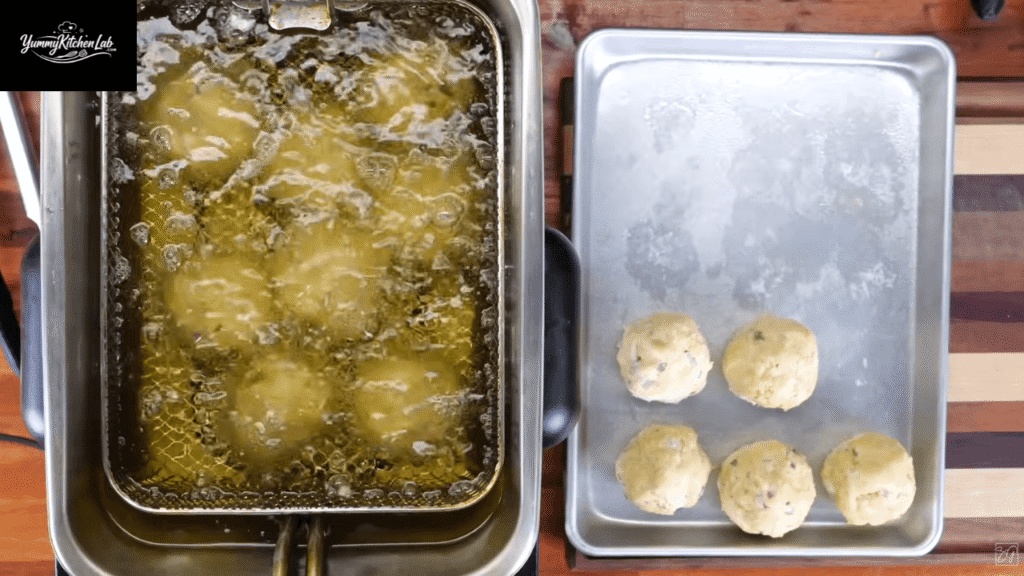
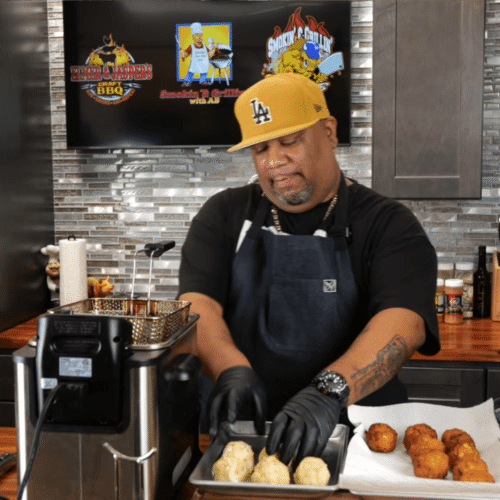
Heat your neutral oil in a deep pan over medium-high heat. Lower the crab balls in carefully and don’t overcrowd the pan. Give them room. Crowding the pan drops the oil temperature and causes steaming instead of frying, which kills the crust. Cover with a lid for the first couple of minutes, then check the color. You’re cooking these entirely by eye. When the exterior is deep, even golden brown, they’re done. No thermometer needed.
Step 8: Drain and Rest
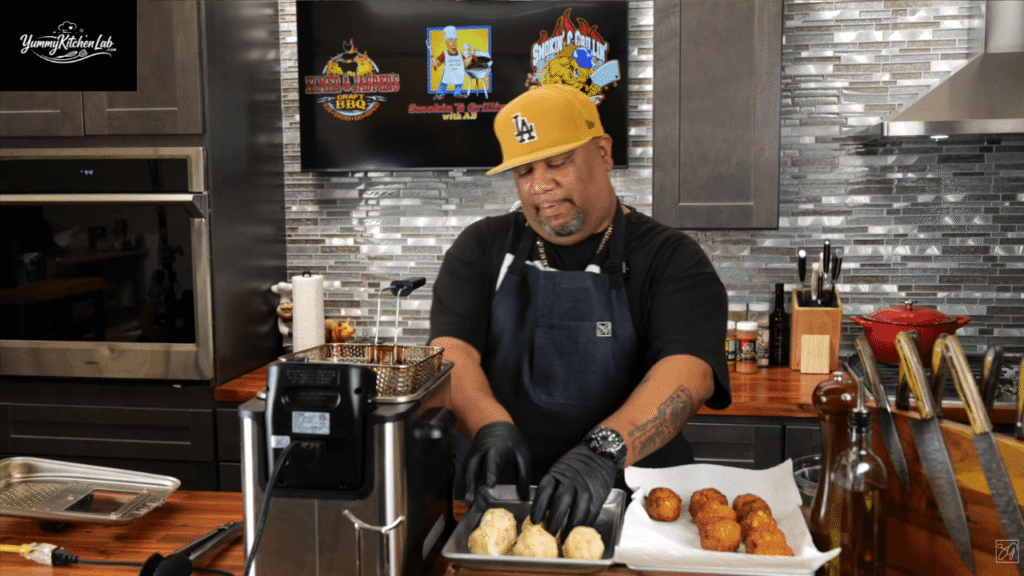
Lift the crab balls out of the oil and set them on a wire rack or a paper towel-lined plate to drain. They should look evenly golden and feel firm to the touch. Let them sit for about a minute before serving. The interior firms up just slightly as they cool, and the texture is genuinely better for it. Resist the urge to immediately bite in. (I know. It’s hard.)
Pro Tips to Make the Perfect Southern Crab Balls
A few small things make a big difference with this recipe. Here’s what actually matters.
Chill for two hours if you can. One hour works, but two gives you firmer, more manageable balls that hold their shape better throughout the whole process.
Use cold hands when forming. Warm hands melt the surface of the chilled mixture fast, which makes rolling messy. Run your hands under cold water before you start and again halfway through if needed.
Don’t skip the frothy egg step. It seems minor. It’s not. Well-whisked eggs make the batter noticeably lighter. Under-beaten eggs contribute to a denser, heavier result.
Hunt down creole mustard. Dijon works, but creole mustard is grainier and tangier in a way that adds real depth. Check the condiment aisle of a larger grocery store or just order it online.
Keep your portions consistent. Balls of different sizes don’t fry evenly. The smaller ones will overcook before the bigger ones are done. Take an extra 30 seconds to make them match.
Stick with panko. Fine breadcrumbs make the inside gluey. Panko keeps it light. This is the most common substitution mistake, and it’s worth avoiding.
Cook to color, not to the clock. Trust your eyes on this one. Deep, even golden brown means they’re ready. Pull them at that point and don’t second-guess it.
Fry a test ball first. If you’re unsure about your oil temp or timing, fry one small ball before committing the whole batch. Adjust based on what you see.
Serving Ideas
Southern crab balls are flexible, which is part of what makes them so useful. Here are four ways to serve them that actually work.
Party Appetizer with Rémoulade
This is the classic move for good reason. The rémoulade sauce is tangy, slightly spiced, and creamy in a way that complements the richness of the crab without drowning it. Make the sauce ahead of time and serve it in a small ramekin on the side. Two per guest is generous. Three and people will love you forever.
Seafood Platter Centerpiece
Place the crab balls at the center of a larger seafood spread with shrimp cocktail, oysters, and smoked salmon. The fried element contrasts really well with the cooler, cured items around it. IMO, the crab balls always disappear first from this kind of spread.
Brunch Table Addition
Crab balls at brunch sounds unexpected but works beautifully. Pair them with a simple green salad dressed with lemon vinaigrette and serve alongside scrambled eggs and grilled bread. The brightness of the salad cuts through the richness of the fried crab perfectly.
Game Day Two-Bite Snacks
Make them about half the standard size and they become perfect game day snacks that people can grab without needing a plate. Smaller balls also mean shorter fry time and more servings from the same batch. Serve with both rémoulade and hot sauce so everyone’s covered.
For presentation, a dark slate board or a clean white ceramic plate lets that golden color stand out. A drizzle of rémoulade across the top and a few sprigs of fresh parsley keep things looking sharp without overcomplicating it. A squeeze bottle gives you clean sauce lines if you want a more polished look.
Can I use imitation crab meat instead of real crab?
Honestly? Skip it. Imitation crab has a higher water content, a rubbery texture, and a flavor that just doesn’t work with this seasoning profile. If real crab is too pricey right now, it’s worth waiting until it goes on sale rather than forcing a substitute that won’t deliver.
What oil works best for frying crab balls?
Go with a neutral oil that has a high smoke point. Vegetable oil, canola oil, and peanut oil are all solid choices. Avoid olive oil for this one. The smoke point is too low and the flavor clashes with the crab.
Can I make the batter the night before?
Yes, and actually, you should consider it. Overnight chilling firms up the mixture even more and gives the flavors more time to come together. Just cover the bowl tightly with plastic wrap and you’re good to go the next day.
Why are my crab balls falling apart in the oil?
Two likely culprits. Either the mixture didn’t chill long enough before you formed the balls, or you packed them too tight and handled them too roughly going into the oil. Make sure the mixture is properly cold, lower the balls in gently, and double-check that your panko ratio is right. Too much liquid relative to panko will always cause collapse.
Can I bake these instead of frying?
You can, but manage your expectations. Baked crab balls won’t get that crispy exterior and come out softer and denser overall. If baking is your only option, set your oven to 400°F, place them on a parchment-lined baking sheet, and bake for 18 to 20 minutes, turning once halfway through. Still tasty, just a different experience.
Wrapping It Up
Southern crab balls are one of those recipes that look fancier than they are, taste better than people expect, and disappear faster than you planned for. Short ingredient list, straightforward technique, and a result that genuinely delivers every single time. Whether you’re serving them at a party, a brunch, or just a Tuesday night where you wanted something worth making, this recipe holds up.
Give the rémoulade a try alongside them. Don’t skip the chill time. Use real crab. And make a double batch if you’re feeding more than four people, because trust me, you’ll wish you had.
Now go make them and report back. Seriously.
crab balls recipe
Ingredients
- 2 cans lump crab meat, drained
- 1 cup panko bread crumbs
- 2 large eggs
- 3 tbsp full-fat mayonnaise
- 1 tbsp dijon mustard (or creole mustard)
- 1 tbsp fresh lemon juice
- Pinch of cayenne pepper
- 1/2 tsp black pepper
- Small pinch kosher salt
- 2 green onions, diced small
- 1/4 red onion, diced small
- Neutral oil for frying
Instructions
- Whisk eggs until light and frothy.
- Add mayo, mustard, lemon juice, cayenne, onions, salt, and pepper. Stir to combine.
- Fold in panko until batter thickens.
- Break crab meat apart gently and fold into batter.
- Cover and refrigerate for 1 to 2 hours.
- Form chilled mixture into golf ball-sized rounds. Do not compress tightly.
- Heat oil in a deep pan over medium-high heat.
- Fry in batches until deep golden brown on all sides, about 3 to 4 minutes.
- Drain on a rack or paper towels and serve with rémoulade.
Video
Notes
- Creole mustard is the traditional choice. Dijon is the best available substitute.
- Batter can be made up to 24 hours ahead and stored covered in the refrigerator.
- Make them half size for party servings and reduce fry time accordingly.