

Need a breakfast side that takes less time than brewing your coffee? This olive salad recipe is my go-to. You chop a few things, toss them in a bowl, and suddenly you look like someone who has their life together. 🙂
- Where This Salad Comes From
- What You Need for This Olive Salad
- Green Olives (1/2 Cup)
- Black Olives (1/2 Cup)
- Spring Onion (1 Cup, Chopped)
- Tomato (1, Chopped)
- Parsley (1/4 Cup, Chopped)
- Olive Oil (1 Tablespoon)
- Pomegranate Syrup (1 1/2 Tablespoons)
- Sumac (1 Teaspoon)
- How to Make Olive Salad (Step by Step)
- 1. Drain and Dry the Olives
- 2. Chop the Olives
- 3. Chop the Spring Onion, Tomato and Parsley
- 4. Combine Everything in a Big Bowl
- 5. Add the Olive Oil, Pomegranate Syrup and Sumac
- 6. Mix Well and Serve
- Pro Tips for the Best Olive Salad
- Serving Ideas for Olive Salad
- Olive Salad FAQs
- Can I use pitted olives from a jar or can?
- What can I use instead of pomegranate syrup?
- How long does olive salad keep in the fridge?
- Why is my salad watery?
- Can I make this olive salad for a crowd?
- Final Thoughts
- Olive Salad Recipe
The flavor is salty, tangy and a little sweet, and it works for breakfast, lunch or a diet plan. IMO, it beats most “fancy” salads that need fifteen ingredients and a dressing you have to whisk.
Where This Salad Comes From
Olive salads with fresh herbs and sumac show up all over Middle Eastern and Eastern Mediterranean tables. Families usually serve them at breakfast next to bread, cheese and eggs. The sharp, salty bite cuts through all that rich stuff, which is exactly why it works.
My version keeps the tradition but strips the method down to the basics. You chop, you mix, and you eat. Nobody needs a culinary degree for this one.
What You Need for This Olive Salad
The list is short, so every ingredient has to earn its spot. There is nowhere to hide a mediocre olive here. Here is what goes in the bowl and why.

Green Olives (1/2 Cup)
Green olives bring the firm bite and the brightest saltiness. I love pitted Manzanilla or Castelvetrano because they taste meaty without being harsh. Skip the pimento or garlic stuffed ones, since those flavors bully everything else. Got olives with pits? Pull them out first, unless you enjoy a surprise dental visit.
Black Olives (1/2 Cup)
Black olives mellow the sharper green ones and add an earthy depth. Choose sun-ripened or oil-cured ones if you can. Canned black olives work in an emergency, but they taste flat and turn mushy fast. Drain and pat them dry so they don’t water down your dressing.
Spring Onion (1 Cup, Chopped)
Yes, a whole cup. It sounds like a lot, but spring onion is the backbone of this salad. The white parts bring a mild sharpness and the green tops add a fresh, grassy note.
Red onion works as a backup, but it hits harder. Use about half the amount and rinse it in cold water first. Whatever you pick, chop it small, because huge onion chunks ruin the vibe.
Tomato (1, Chopped)
One ripe tomato adds juiciness and a gentle tang that ties the olives and syrup together. I pick Roma tomatoes because they hold less water than round ones. Got a super juicy tomato? Scoop out the seeds before chopping, or you will end up with salad soup.
Parsley (1/4 Cup, Chopped)
Flat-leaf parsley gives you a clean, peppery freshness that balances all that salt. I prefer it over curly parsley because it tastes stronger and feels less scratchy. Dry the leaves well after washing, since wet herbs dilute the dressing. Chop it right before mixing, because it darkens fast.
Olive Oil (1 Tablespoon)
Olive oil holds the dressing together and spreads the sumac flavor around. Use a decent extra virgin one, because nothing cooks away its taste here. The olives already carry oil and brine, so one tablespoon is plenty. Pour more and the salad turns greasy, which buries the good stuff.
Pomegranate Syrup (1 1/2 Tablespoons)
This is the star. Pomegranate syrup (often labeled pomegranate molasses) is thick, dark and tart, with a fruity sweetness that plain vinegar can’t touch. Check the label and buy a bottle where pomegranate is the main ingredient, not sugar.
No syrup? Try lemon juice with a tiny drizzle of honey. FYI, it tastes lighter, but it saves the day.
Sumac (1 Teaspoon)
Sumac is a deep red spice with a lemony tang and zero heat. Fresh sumac smells fruity, so toss any jar that smells like dust. Lemon zest works as a substitute, though it misses the earthy depth. Sprinkle it at the end so the color stays bright.
How to Make Olive Salad (Step by Step)
The method is simple, but the order matters. Chop everything to a similar size and the salad eats so much better. Follow these steps and you will have a bowl ready in about 10 minutes.
1. Drain and Dry the Olives
Drain the green and black olives and pat them dry with a paper towel. Extra brine makes the salad taste wet and flat instead of sharp. Pull out any pits now.
2. Chop the Olives
Chop both olives into small, even pieces. Small pieces spread the salt around, so you won’t bite into one giant salty chunk followed by plain tomato. Use a sharp knife, because a dull one squashes olives instead of slicing them.

3. Chop the Spring Onion, Tomato and Parsley
Chop the spring onion, tomato and parsley next. Cut the tomato about the same size as the olives so every forkful tastes balanced. Blot it lightly if it looks juicy, since extra liquid pools at the bottom.
4. Combine Everything in a Big Bowl
Grab a large bowl and add the olives, spring onion, tomato and parsley. Mix well. Pick a bowl bigger than you think you need, because a roomy bowl lets you toss without launching salad onto the counter.

5. Add the Olive Oil, Pomegranate Syrup and Sumac
Pour in the olive oil and pomegranate syrup, then sprinkle the sumac over the top. Adding the dressing last keeps the tomato from leaking water too early. The syrup is thick, so scrape your spoon against the bowl edge to get every drop.

6. Mix Well and Serve
Toss everything gently until the dressing coats every piece. Taste a forkful before you add any salt, because the olives usually cover it. Serve it right away for breakfast or as part of a lighter meal.
Pro Tips for the Best Olive Salad
I make this salad all the time, and these tricks save it from “meh” territory:
- Dry your olives and herbs. Wet ingredients dilute the syrup and leave a puddle at the bottom of the bowl.
- Chop everything the same size. Uneven pieces give you salty bites and bland bites.
- Taste an olive first. Brands vary a lot in saltiness, so a quick nibble tells you if the salad needs extra seasoning. It usually doesn’t.
- Dress it at the last minute. Salt pulls water out of the tomato, so early dressing equals soggy salad.
- Buy real pomegranate syrup. Cheap blends with added sugar taste flat and weirdly sweet.
- Add a fresh pinch of sumac before serving. It brings back the bright red color and sharp aroma.
- Chill it for 10 minutes if you can. The flavors settle together. Skip anything past an hour, because the tomato goes soft.
Serving Ideas for Olive Salad
This salad plays well with almost anything mild or rich, because its sharp flavors cut right through. Here are four ways I serve it.
Middle Eastern Breakfast Spread
Put it next to warm flatbread, labneh, soft cheese and boiled or fried eggs. The salty, tart salad balances the creamy dairy. Scoop it onto bread with a smear of labneh and thank me later.
Light Lunch for a Diet Plan
Pair it with grilled chicken breast, baked fish or a boiled egg. You get big flavor without heavy sauces. The olives and olive oil also keep you full longer than a plain green salad does.
Mezze Table Starter
Set a bowl next to hummus, baba ganoush, stuffed grape leaves and warm pita. Guests can spoon it over dips or eat it solo. The bright colors also make the table look like you tried harder than you did.
Side for Grilled Meat
Serve it with kebabs, lamb chops or roasted chicken. The sumac and pomegranate syrup cut through the fat and reset your taste buds between bites. Think of it as a relish, so a small scoop per plate does the job.
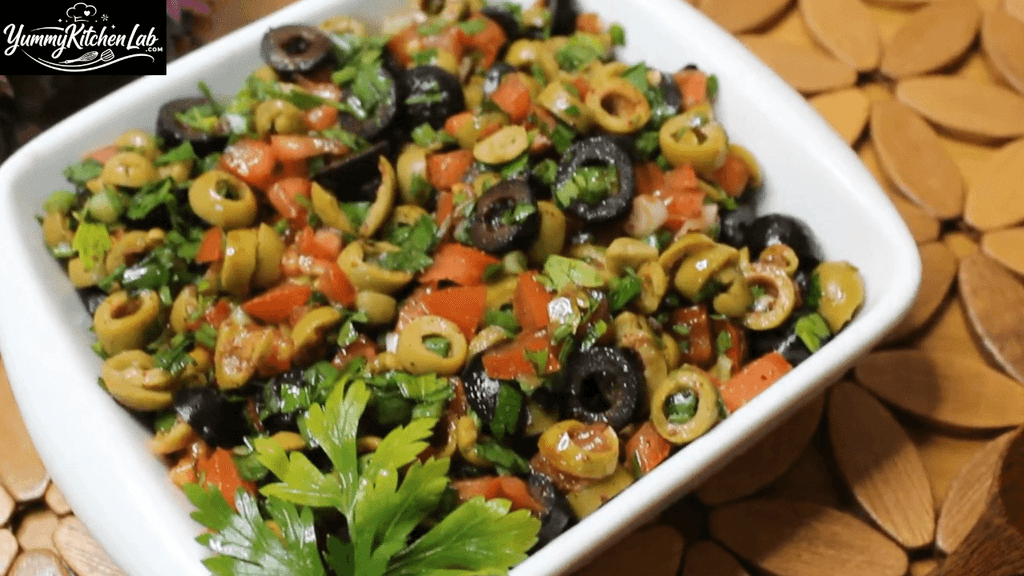
For presentation, pick a shallow white or earthy ceramic bowl so the green, black and red colors pop. Add a pinch of sumac and a few parsley leaves on top. A wide dish also makes scooping easier than a deep bowl does.
Olive Salad FAQs
Can I use pitted olives from a jar or can?
Yes, pitted olives save time and work great. Drain them well and pat them dry. If you have a choice, jarred olives usually taste better than canned ones.
What can I use instead of pomegranate syrup?
Mix one tablespoon of lemon juice with half a teaspoon of honey. It tastes lighter and brighter, without the deep fruity tang. For the closest match, hunt down pomegranate molasses at a Middle Eastern grocery store or online.
How long does olive salad keep in the fridge?
It keeps for up to a day in a covered container, though the tomato softens as it sits. For the best texture, store the olives and herbs together and add the tomato and dressing fresh. Stir it and add a fresh pinch of sumac before serving.
Why is my salad watery?
Wet olives, damp parsley and juicy tomatoes cause most of the trouble. Pat everything dry, scoop out the tomato seeds, and dress the salad right before serving. Salt keeps pulling out moisture over time, so don’t let the finished bowl sit around.
Can I make this olive salad for a crowd?
Absolutely. Double or triple the ingredients and keep the same ratio of oil, syrup and sumac. Mix it in a very large bowl and dress it right before your guests arrive.
Final Thoughts
This olive salad recipe wins because it asks for so little. You get a salty, tangy, slightly sweet bowl in 10 minutes, with no stove and almost no cleanup. Dry your ingredients, chop everything small, and dress it at the last second, and you will nail it every time.
So grab those olives and give it a shot. Tried it already, or have a twist of your own? Tell me what you think in the comments, because I’m always hunting for new ways to mess with this one.
Olive Salad Recipe
Ingredients
- 1/2 cup green olives
- 1/2 cup black olives
- 1 cup spring onion chopped
- 1 tomato chopped
- 1/4 cup parsley chopped
- 1 tbsp olive oil
- 1 1/2 tbsp pomegranate syrup
- 1 tsp sumac
Instructions
- Drain and dry the olives.
- Chop the green and black olives.
- Chop the spring onion, tomato and parsley.
- Combine everything in a big bowl.
- Add the olive oil, pomegranate syrup and sumac.
- Mix well and serve.
Notes
- No pomegranate syrup? Use lemon juice with a little honey.
- Store covered in the fridge for up to one day.
- Dress just before serving to keep the tomato fresh.

