

Let’s be honest. Most boneless wings you’ve eaten in your life were mid. The frozen ones taste like seasoned styrofoam. The restaurant ones? Sitting under a heat lamp since 2019. And the homemade ones usually end up being glorified nuggets with hot sauce dumped on top. But this recipe is different, and I’m not just saying that. This is the version that actually nails the brine, the coating, AND the sauce. All three. At the same time.
- What Actually Makes This Recipe Better
- Ingredients for Homemade Boneless Wings
- Chicken Breast
- Water, Salt, and Sugar (Brine)
- All-Purpose Flour
- Cornstarch
- Eggs, Milk, and Water (Egg Wash)
- Hot Sauce
- Butter and Cornstarch (For the Sauce)
- Blue Cheese Dressing and Gorgonzola
- Celery
- How to Make Boneless Wings Step by Step
- Step 1: Brine the Chicken
- Step 2: Cut the Chicken Into Even Pieces
- Step 3: Mix the Dry Coating
- Step 4: Set Up the Egg Wash
- Step 5: Double-Coat Every Piece
- Step 6: First Fry — 4 Minutes
- Step 7: Make the Buffalo Sauce
- Step 8: Second Fry — 2 Minutes
- Step 9: Toss in Sauce and Serve
- Pro Tips to Make the Perfect Boneless Wings
- Serving Ideas for Boneless Buffalo Wings
- Frequently Asked Questions
- What cut of chicken is best for boneless wings?
- How do I keep the chicken juicy?
- How do I get them super crispy?
- What temperature should the oil be?
- One Last Thing Before You Cook
- Boneless Wings
“When I first heard about boneless chicken wings, I was like — how the heck did they do that? Then I saw one and I’m like, nope, that’s a chicken nugget.”
That quote is painfully accurate. Boneless wings are not wings. They never were. They are pieces of chicken breast, breaded, fried, and tossed in sauce. But here’s the thing — when you make them right at home, they are honestly better than most restaurants serve. No dried-out chicken. No watery sauce. No waiting 20 minutes for a server to notice you exist.
What Actually Makes This Recipe Better
Most boneless wing recipes fail in one of three spots. They skip the brine, so the chicken tastes flat and dries out in the fryer. They use only flour in the coating, so it goes soft the second the sauce touches it. Or they just melt butter into hot sauce and call it a day, ending up with something that runs straight off the chicken and pools at the bottom of the bowl.
This recipe fixes all three. The brine keeps the chicken juicy through a double fry. The cornstarch in the coating creates a crust that actually holds up. And the sauce uses cornstarch too, so it’s thick, creamy, and clingy in the best possible way. Once you try it this way, you’ll wonder why you ever ordered them out.
Ingredients for Homemade Boneless Wings
Before you start cooking, get everything out and measured. The frying process moves fast, and fumbling around for ingredients mid-fry is a great way to burn your chicken and your patience at the same time.
Chicken Breast
Chicken breast is your foundation here. You want boneless, skinless breasts with some real thickness to them. Thin breasts overcook fast and dry out before the outside even gets properly golden. Look for pieces that are close to the same size so they cook evenly. Cut each breast in half lengthwise first, then slice the other way into squares. FYI, don’t try to save time with chicken tenders. The texture is too soft and they fall apart during the double coating process.
Water, Salt, and Sugar (Brine)
The brine is the most skipped step in any fried chicken recipe, and it’s also the reason restaurant chicken tastes better than yours has in the past. Salt pulls moisture into the meat, and sugar balances everything out while adding a little background depth. You don’t need anything fancy here. Plain table salt and regular white sugar dissolved in cold water is all it takes. Give the chicken at least six hours, or just leave it overnight if you’re prepping ahead. Skipping it is technically an option, but your chicken will taste noticeably drier.
All-Purpose Flour
Flour is the structure behind the whole coating. It’s what gives the outside of each piece its body and what the egg wash clings to during the double dip. Stick with regular all-purpose flour here. Self-rising flour adds lift and throws off the texture completely. Since the coating goes on twice, even that first thin layer of flour matters more than you’d expect.
Cornstarch
This is the ingredient that most people leave out, and it’s the one that makes the biggest difference. Mixing cornstarch into the flour creates a crunchier, lighter crust. It’s the same technique behind General Tso’s chicken and a lot of Chinese-American fried dishes. When cornstarch hits hot oil, it sets almost instantly into a thin, glass-like shell that resists moisture far better than flour alone. Don’t swap it for baking powder thinking you’ll get the same result. You won’t.
Eggs, Milk, and Water (Egg Wash)
The egg wash is the glue between your two layers of coating. Eggs provide protein that sets during frying, milk adds some fat and richness, and water thins everything just enough to coat evenly without clumping up. Use whole eggs and whole milk for the best result. If you add too much water, the wash slides off. Too little, and the coating goes on uneven and thick in weird spots.
Hot Sauce
Hot sauce is the backbone of your buffalo coating. Most people reach for Frank’s RedHot, which is the classic go-to for a reason. What you want to avoid is anything too thin or too vinegar-forward. Those sauces run straight off the chicken no matter what you do to them. Whatever brand you use, make sure it has enough body to hold its shape once you start building the sauce around it.
Butter and Cornstarch (For the Sauce)
Here’s where most people drop the ball on buffalo sauce. Melting butter into hot sauce gives you a thin, oily mess that slides right off your chicken. Adding cornstarch and whisking the sauce over medium heat turns it into something thick, glossy, and clingy. The cornstarch gelatinizes as it heats up, giving the sauce a creamy consistency that actually coats each piece instead of dripping off it. Keep whisking and don’t rush this step.
Blue Cheese Dressing and Gorgonzola
Store-bought blue cheese dressing is a perfectly solid base. Adding crumbled gorgonzola into it is what makes it genuinely good. Gorgonzola has a sharper, saltier flavor than most other blue cheeses, and it breaks down well when mixed into dressing. If you can’t find it, crumbled Danish blue or Roquefort both work well. Skip the pre-shredded or powdered blue cheese. It doesn’t blend properly and leaves a gritty texture that nobody wants.
Celery
Celery is doing real work here. The cool crunch of fresh celery against hot, saucy chicken is a contrast that makes the whole plate taste better. Buy fresh stalks and cut them yourself. The pre-cut stuff from a bag has already lost most of its crispness, and wilted celery next to crispy wings is a sad situation.
How to Make Boneless Wings Step by Step
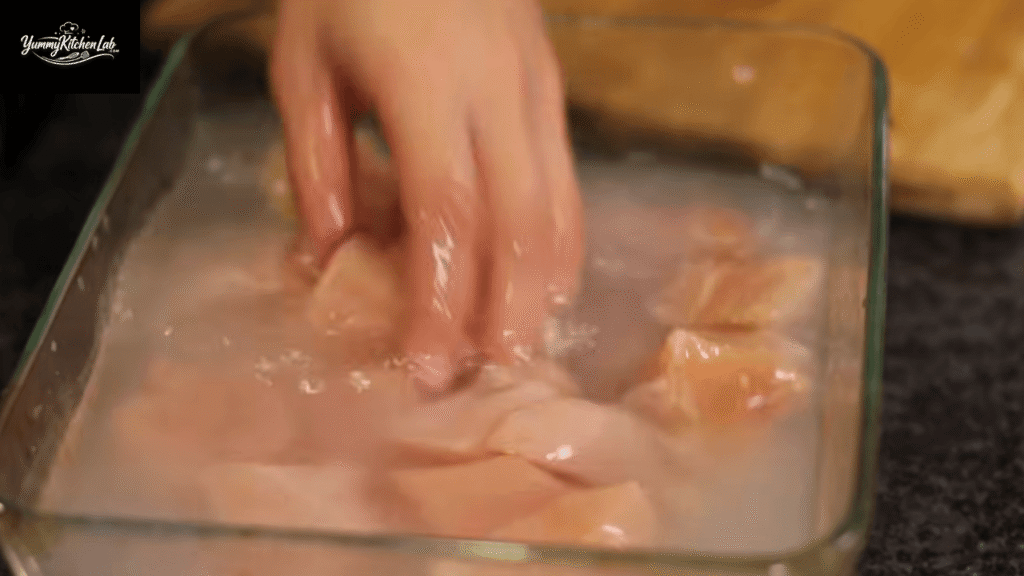
Step 1: Brine the Chicken
Dissolve salt and sugar in cold water inside a large bowl, then fully submerge your chicken pieces and refrigerate for six hours. This is what keeps the chicken moist through two rounds of frying. Without it, the interior starts drying out before the outside reaches the right color and crunch. It’s boring prep, I know. Do it anyway.
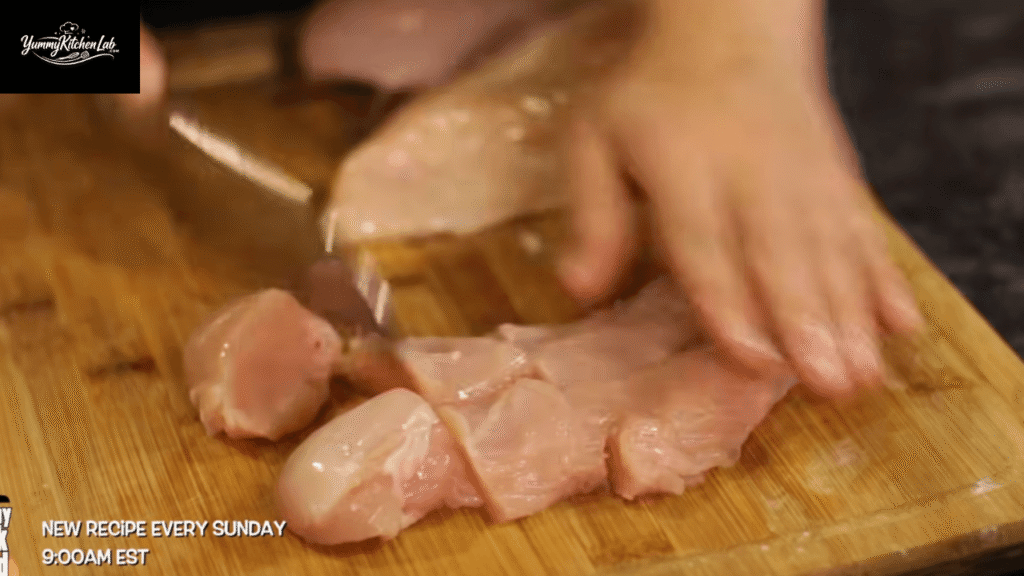
Step 2: Cut the Chicken Into Even Pieces
Pull the chicken out of the brine and cut each breast in half lengthwise, then slice across into equal squares. Even sizing is not optional here. Unevenly cut pieces cook at different rates, so you’ll end up with some that are overdone while others are still pink in the middle. Aim for about 1.5 to 2 inches across for each piece.
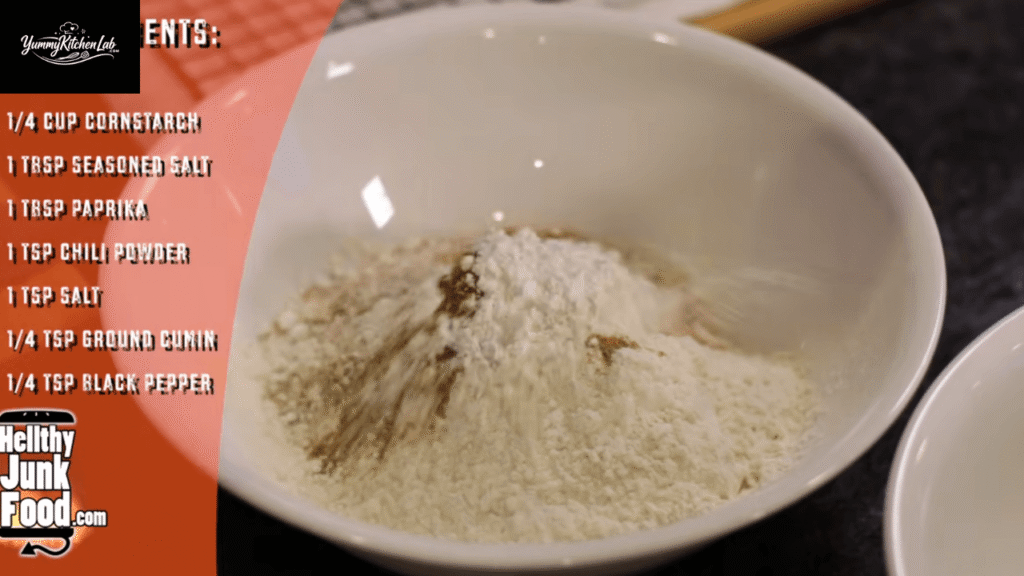
Step 3: Mix the Dry Coating
Combine flour, cornstarch, and your seasonings in a shallow bowl. The ratio that works best is roughly one part cornstarch to three parts flour. Mix it thoroughly before you start dredging. If the cornstarch settles at the bottom and clumps, your coating will be inconsistent from piece to piece.
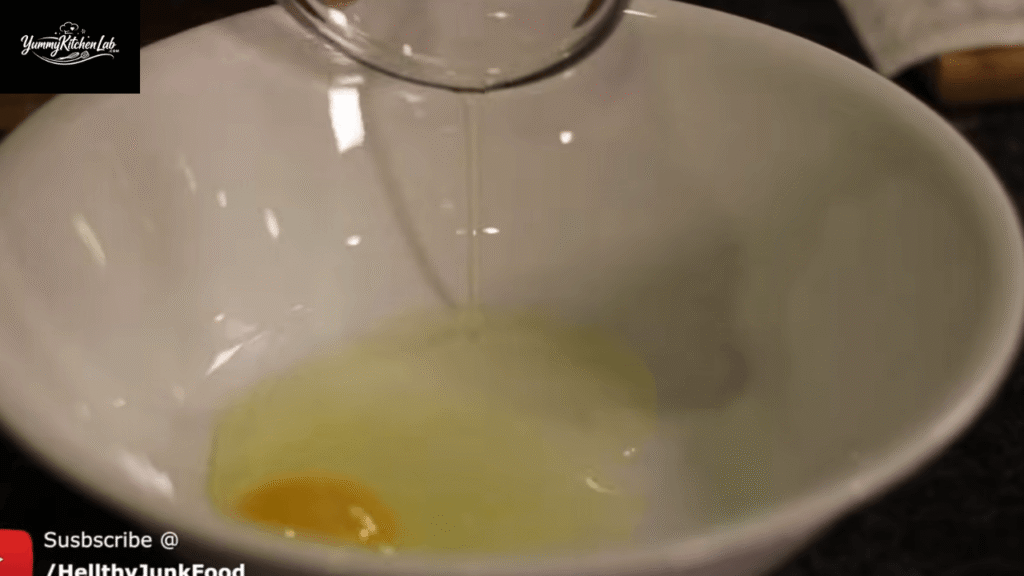
Step 4: Set Up the Egg Wash
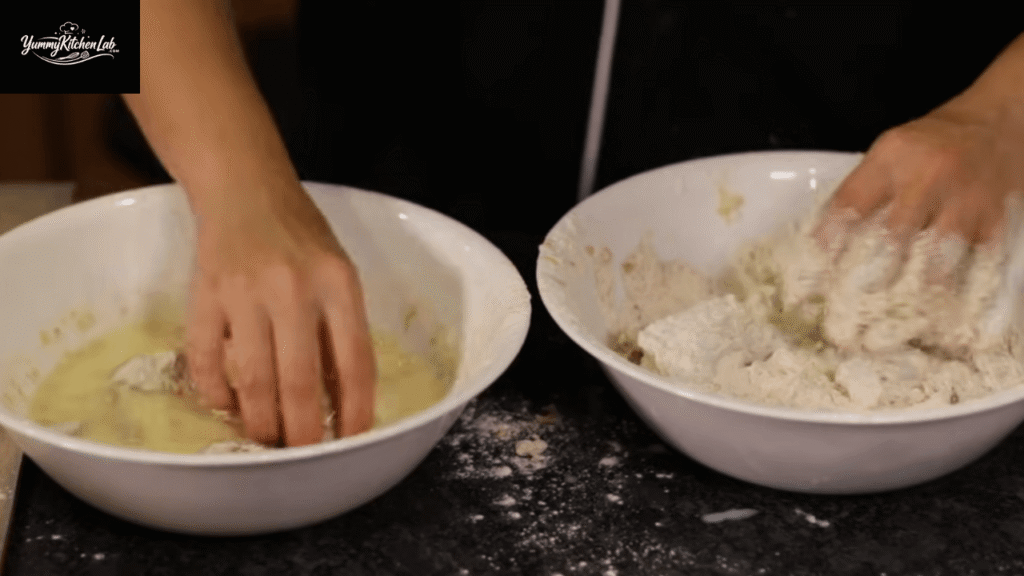
Whisk eggs, milk, and a splash of water in a separate shallow bowl until the mixture is fully combined and uniform in color. Set up your breading station with the dry coating on the left, egg wash in the middle, and a clean plate or tray on the right for the coated pieces. Having everything laid out before you start saves a lot of mess.
[IMAGE — Timestamp: 1:25–1:32 — What to screenshot: Chicken pieces being dredged through flour coating and then dipped into egg wash, showing the double-coating technique in progress. — Placement: Between Step 4 and Step 5]
Step 5: Double-Coat Every Piece
Dredge each piece in the flour mixture, shake off the excess, dip it fully in the egg wash, then dredge it in the flour mixture again. That second layer is what creates the thick, craggy exterior that holds sauce without going soggy. Keep one hand for dry and one hand for wet. This sounds fussy but it stops the flour from turning into wet paste on your fingers after the first few pieces, which is genuinely annoying.
Step 6: First Fry — 4 Minutes
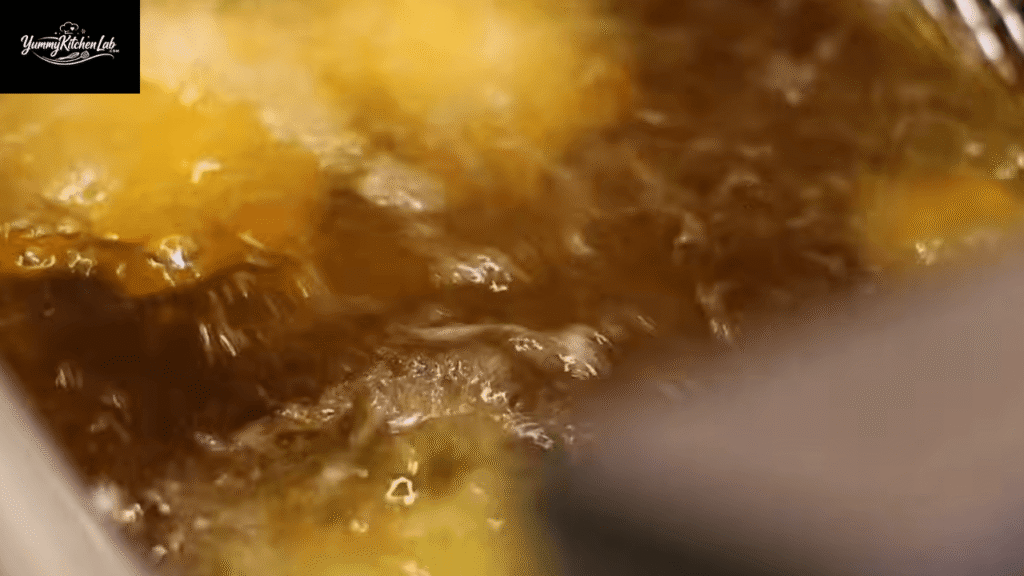
Heat your oil to 350°F and fry the chicken in batches for four minutes. You’re not finishing the chicken here. You’re setting the coating and partially cooking the interior. Don’t crowd the pot. Overcrowding drops the oil temperature and you’ll get a pale, greasy coating that won’t crisp up properly in the second fry.
[IMAGE — Timestamp: 1:40–1:50 — What to screenshot: Partially fried boneless wing pieces in the fryer oil, showing the golden coating beginning to form. — Placement: Between Step 6 and Step 7]
Step 7: Make the Buffalo Sauce
While the chicken rests from the first fry, whisk hot sauce, butter, and cornstarch together in a small saucepan over medium heat. It will look thin at first. Keep whisking. Within a few minutes it will tighten into a glossy, creamy sauce that coats the back of a spoon. Once it holds its shape, pull it off the heat and keep it warm while you finish the chicken.
[IMAGE — Timestamp: 1:08–1:15 — What to screenshot: The buffalo sauce being whisked in a saucepan over heat, showing the thick, creamy texture forming as the cornstarch activates. — Placement: Between Step 7 and Step 8]
Step 8: Second Fry — 2 Minutes
Right before serving, drop the chicken back into the oil for two more minutes. This is the step that takes the coating from golden to deep, crispy brown. Don’t skip it and don’t shorten it. This is what separates a coating that stays crunchy after saucing from one that turns to mush before it hits the table.
Step 9: Toss in Sauce and Serve
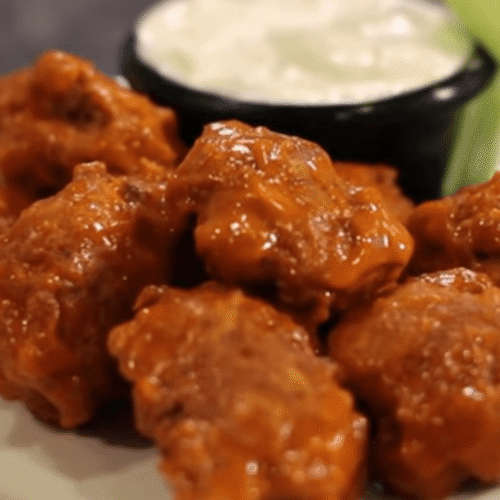
Pour the warm buffalo sauce into a large bowl, add the fried chicken pieces, and toss until every piece is fully coated. Serve immediately on a white plate with chunky blue cheese in a small ramekin and fresh celery on the side. Speed matters here. The longer you wait after saucing, the softer the coating gets.
[IMAGE — Timestamp: 1:51–2:00 — What to screenshot: Crispy chicken pieces being tossed in the thick buffalo sauce inside a large bowl, showing each piece being fully coated. — Placement: Between Step 9 and the Pro Tips section, closing beauty moment]
Pro Tips to Make the Perfect Boneless Wings
Here are the details that separate a good batch from a great one. Most of them are small things, but they add up fast.
Don’t skip the brine. Six hours minimum, overnight if possible. Brined chicken stays juicy through a double fry in a way that unbrined chicken simply cannot.
Keep your oil temperature consistent. Stay at 350°F throughout both fries. No thermometer? Drop a small pinch of flour into the oil. If it sizzles right away, you’re good. If it sinks and sits there, the oil needs more time.
Pat the chicken dry before coating. Excess moisture from the brine causes the first layer of coating to slip off during frying. A quick pat-down with paper towels makes a real difference.
Rest between fries. Let the chicken sit for at least five minutes after the first fry before the second one. The interior finishes cooking gently during that rest, so the second fry can focus on the exterior.
Never stop whisking the sauce. Cornstarch will clump if you walk away mid-heat. Keep it on medium, not high, and stir constantly until you reach the right consistency.
Sauce right before serving. Once the coating meets the sauce, the clock starts ticking. Toss and get it on the table immediately. If you’re hosting, keep the sauce and chicken separate until the last minute.
Season the flour well. The coating is where you control the base flavor of each piece. Salt, garlic powder, onion powder, and smoked paprika all work well together in the dry mix.
Use a wire rack after the first fry. Resting on paper towels traps steam underneath each piece and makes the bottom go soft. A wire rack lets air circulate and keeps everything crisper.
Serving Ideas for Boneless Buffalo Wings
Boneless wings are more versatile than most people give them credit for. Here are four ways to serve them that actually do them justice.
Game Day Spread
Put the wings at the center of a full spread with chunky blue cheese, ranch dressing, celery sticks, and carrot sticks around them. Cold beer on the side is non-negotiable. Keeping some sauce in a separate bowl lets guests control how much heat they want on each piece, which people always appreciate more than you’d expect.
Weeknight Dinner With Fries
Boneless wings and a tray of oven fries is a completely legitimate weeknight dinner once the brine is done. Add a simple green salad to cut through the richness of the buffalo sauce. It feels like a restaurant-style treat without requiring much actual effort on a Tuesday night.
Party Appetizer Board
Arrange the wings on a large serving board with small ramekins of dipping sauce, sliced vegetables, and some crusty bread. The make-ahead trick here is doing the first fry hours in advance, holding the chicken at room temperature, and doing the final two-minute fry right before guests eat. It works well and no one will know you planned ahead.
Boneless Wing Sandwich
Layer leftover boneless wings into a soft brioche bun with chunky blue cheese dressing and a few thin slices of fresh cucumber. The spicy, crispy chicken against the cool, creamy dressing inside a soft bun is one of the better things you can do with leftovers from this recipe, IMO.
For presentation, a white plate with clean edges lets the color of the buffalo sauce stand out on its own. A black ramekin for the blue cheese adds contrast without making the plate feel overcrowded. Keep the celery stalks upright rather than flat. It sounds like a small thing, but a plate that looks deliberate always gets noticed.
Frequently Asked Questions
What cut of chicken is best for boneless wings?
While you can use thighs for extra juiciness, chicken breast is the standard. To keep them from drying out, cut them into uniform 1-inch chunks and don’t overcook them.
How do I keep the chicken juicy?
The “slap” secret is a buttermilk brine. Soak your chicken pieces in buttermilk (or plain yogurt thinned with milk) and a splash of hot sauce for at least 30 minutes before breading. This tenderizes the meat and helps the flour stick.
How do I get them super crispy?
The secret is Cornstarch. Mix your all-purpose flour with cornstarch (a 3:1 ratio). Cornstarch prevents gluten development and creates a glass-like crunch that stays crispy even after saucing.
What temperature should the oil be?
Aim for 350°F (175°C). If the oil is too cold, the wings get greasy; if it’s too hot, the outside burns before the inside is cooked. Use a thermometer!
One Last Thing Before You Cook
Boneless wings have had a rough reputation for a long time, mostly because of frozen bags and sad restaurant versions. This recipe is proof that the concept works when you actually take care of the three things that matter: the brine, the coating, and the sauce. Get those right and you’ve got something genuinely worth making on a weeknight, for a party, or just because you’re craving something crispy and saucy and don’t want to pay restaurant prices for it. Give it a shot, and if someone calls them nuggets, just let them be wrong.
Boneless Wings
Ingredients
- 2 large boneless, skinless chicken breasts
- 4 cups cold water
- 2 salt (for brine)
- 1 sugar
- 1 cup all-purpose flour
- 1/4 cup cornstarch
- 1 teaspoon garlic powder
- 1 1 teaspoon smoked paprika
- 1/2 teaspoon black pepper
- 2 eggs
- 1/4 cup whole milk
- 2 tablespoons water
- 1/2 cup hot sauce
Instructions
- Dissolve salt and sugar in cold water. Brine chicken for 6 hours in the refrigerator.
- Remove chicken, pat dry, and cut into 1.5-inch squares.
- Mix flour, cornstarch, garlic powder, paprika, and pepper in a shallow bowl.
- Whisk eggs, milk, and water together in a second bowl.
- Dredge chicken in flour, dip in egg wash, dredge in flour again
- Fry at 350°F for 4 minutes. Rest on a wire rack
- Whisk hot sauce, butter, and cornstarch over medium heat until thick and smooth.
- Fry chicken again for 2 minutes until deep golden and crispy.
- Toss chicken in warm buffalo sauce until fully coated
- Mix gorgonzola into blue cheese dressing. Serve on a white plate with blue cheese and celery